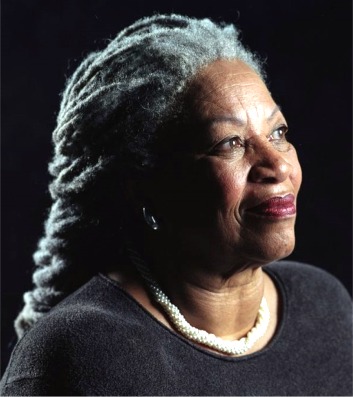
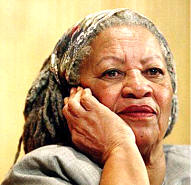
As she gets older - Morrison says -
the world becomes more interesting and more distressing
washingtonpost.com - 2012 - photo alfred
a. knopf
Writing tips
from Toni Morrison
via The Paris Review 2012 1. Write when you know you’re at your best
2. There’s a line
between revising and fretting
3. good editor is
'like
a priest or a psychiatrist'
4. Don’t write with
an audience in mind, write for the characters
5. Control your
characters
6. Plot is like
melody - it doesn’t need to be complicated
7.Style, like jazz, involves endless practice and
restraint
8. Be yourself but
be aware of tradition facebook/morrison - 2013
I am a storyteller and
therefore an optimist, a firm believer in the ethical
bend of the human heart, a believer in the mind's
appetite for truth and its disgust with fraud .
I'm a believer in the power of knowledge and the
ferocity of beauty, so from my point of view, your life is already artful
- waiting, just waiting, for you to
make it art . fb/thetonimorrisonsociety - 2019
The thought that leads me to
contemplate with dread the erasure of other voices, of
unwritten novels, poems whispered or swallowed for fear
of being overheard by the wrong people, outlawed
languages flourishing underground, essayists' questions
challenging authority never being posed, unstaged plays,
canceled films - that thought is a nightmare .
As though a whole
universe is being described in invisible ink . fb/tm - 23.9.2022
chloe
ardelia_anthony
wofford
In her works Toni
Morrison has explored the experience of Black women in a racist
culture...she changed her name from
"Chloe" to "Toni", explaining once that people found "Chloe" too difficult to
pronounce... she edited books by such Black authors as Toni
Cade Bambara and Gayl Jones.
1970...Morrison also established her new identity, which she later
in 1992 rejected: "I am really Chloe Anthony
Wofford. That's who I am. I have been writing under this other
person's name. I write some things now as Chloe Wofford, private
things. I regret having called myself Toni Morrison when I published
my first novel ...
What I’m interested in is
writing without the gaze - without the
white gaze
*
I always get and make a cup of coffee while it is still dark
it must be dark
and then I drink the coffee and watch the light come
.
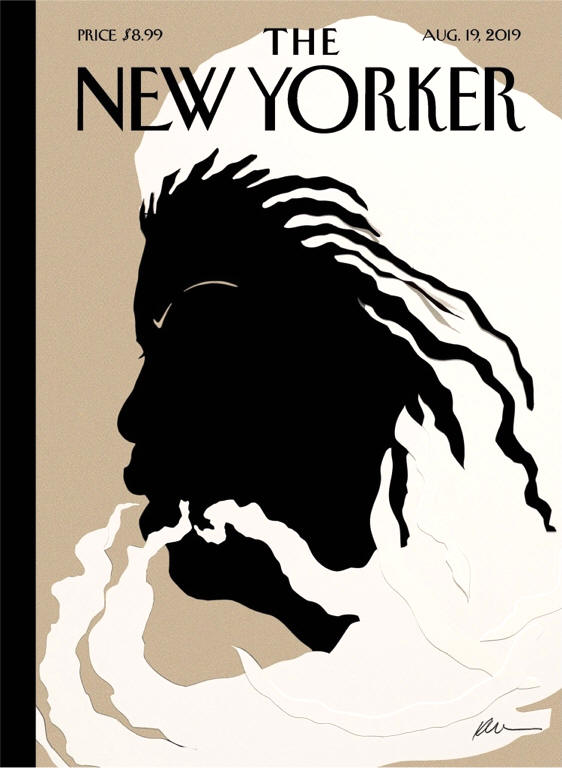
Kara Walker honors Toni Morrison’s life and legacy with
a stunning tribute
for next week’s issue of the new
yorker ❤ fb/thetonimorrisonsociety - 9.8.2019
.
bio Toni Morrison 18.02.1931 - 05.08.2019
The renowned novelist's publisher,
Alfred A. Knopf, shared the news of her death the following
morning . A spokesperson later told the The
New York Times the cause was
complications of pneumonia . yahoo.com jns.org
Toni Morrison
... died Monday night - August 5 - at Montefiore Medical
Center in New York, a source at her publisher, Knopf, confirms
to Pitchfork . pitchfork.com
miamiherald.com AP-new york thejasminebrand.comv
nytimes
en.wikipedia.org
Si spegne a New York - per
complicazioni polmonari - il 5 agosto 2019 .
it.wikipedia.org ansa - 6.8.2019
La famiglia Morrison ha confermato
"con profonda tristezza" che la scrittrice è scomparsa "a
seguito di una breve malattia" . "È morta in pace la
notte scorsa, circondata dalla sua famiglia e dai suoi amici",
hanno scritto in un comunicato i suoi familiari . La
famiglia ha voluto far sapere che "sebbene la sua scomparsa sia
tremenda, siamo grati che lei abbia avuto una vita ben vissuta"
. susanna picone -
fanpage.it
Oh no, no, no. My favourite writer . So dearly
beloved . The only person I wanted to meet in this world
to fall at her feet and say : thank you, thank you, thank you .
I hope you hear it, I hope you know it, as so many
millions do, that you were, and remain, a hero of
countless hearts . siddharth dhanvant shanghvi
<
. A physical world without Toni
Morrison ! Here goes ...
And we are so blessed. So lucky!
Toni Morrison left us so many many gifts. Through her
literature, she gave us an entire language to use in the journey
of our dreams and wishes. Thank you Mama Toni Morrison for
the gifts of words ! The gifts of thought !
The power of language in the fight against the white gaze and
the male gaze !
natalia molebatsi
<
... scopro con grande dispiacere che
qualche giorno fa è mancata Toni Morrison . Ho
di lei un ricordo personale che mi piace condividere, con un
prezioso filmato delle Teche rai, dal Festival di Mantova 2004
. luciano minerva
.
Toni Morrison was a national treasure,
as good a storyteller, as captivating, in person as she was on
the page . Her writing was a beautiful, meaningful
challenge to our conscience and our moral imagination .
What a gift to breathe the same air as her, if only for a while
. barack obama <
.
My deepest condolences to Toni Morrison's
family and her millions of readers . She was a
beloved literary giant . Her work will live forever
inspiring new generations of artists . isabel allende
.
...
originally Chloe ardelia Wofford American
author, who was awarded the Nobel Prize for Literature in 1993. In
her works Toni Morrison has explored the black experience in a
racist culture. She has been a member of both the National Council
on the Arts and the American Academy and Institute of Arts and
Letters. Morrison has actively used her influence to defend the role
of the artist and encouraged the publication of other black writers... Toni Morrison was born Chloe ardelia Wofford in Lorain, Ohio.
Her parents had moved to the North to escape the problems of
southern racism and she grew up relatively unscarred by racial
prejudices. Her family were migrants, sharecroppers on both sides.
She spent her childhood in the Midwest and read voraciously, from
Jane Austen to Tolstoy. Morrison's father, George, was a welder, and
told her folktales of the black community, transferring his
African-American heritage to another generation... exampleessays.com
The Nobel Prize-winning author of Beloved and
Sula began her literary career as an academic, and most of her
twenties were spent studying or teaching at universities. After
graduating from Howard in 1953 she went on to get her Master’s at
Cornell, where she wrote a thesis on the theme of suicide in the
work of William Faulkner and Virginia Woolf. She returned to Howard
at the age of 26 to teach English, and it was during this time that
she began developing the idea for her first novel, The Bluest Eye.
The novel wouldn’t be published until 1970, though, when Morrison
was 39.
policymic.com - fb/tm - 2013
quando era una mamma single abitava a Midtown
Manhattan e il Nobel era di là da venire lavorava in una casa
editrice. Si alzava tutti i giorni alle 5 e scriveva prima di
svegliare i bimbi e prepararli per la scuola. Ancora oggi, che
probabilmente è la scrittrice più pagata d'America, quando lavora a
un romanzo si sveglia all'alba, prende matita e bloc-notes, e
comincia a scrivere. Finché non le fa male la mano. luigi mascheroni - ilgiornale.it - 2013
I get up before the light. I’m really smart
in the morning. I wanted to read a book about the most
vulnerable person in society — female, child, black — and it wasn’t
around, so I started writing it. studio360.org - 2014
Tony Morrison si è trovata a utilizzare
uno pseudonimo suo malgrado. Non tutti, peraltro, sanno che si
tratta di un nom de plume e che il suo vero nome è Chloe Ardelia
Wofford. Tony è un riferimento a
sant’Antonio, cui la scrittrice si
era affidata quando si convertì al cattolicesimo, mentre Morrison era il cognome del suo primo
marito, da cui divorziò alla fine
degli anni Sessanta. Il nome fu utilizzato per pubblicare il suo
primo romanzo, L’occhio più azzurro 1970 e da allora la
scrittrice semplicemente non poté più tornare indietro. Parlando
col New York qualche anno fa, non raccontò perché scelse di
utilizzare uno pseudonimo nel 1970, ma confessò di essersi
pentita della scelta quasi subito: «Non sono stata stupida? Mi
sentii rovinata». Nella stessa intervista/ritratto, la scrittrice premio Nobel rivela anche di
non amare molto il nome Tony Morrison che, sostiene, non le
appartiene. rivistastudio.com - 2018
Morrison Toni -
Nombre literario de Chloe
ardelia Morrison Wafford
novelista norteamericana, n. en Lorain
Ohio. De raza negra y origen modesto, estudió en la Universidad
Howard de Washington, de mayoría negra, y en la Universidad Cornell
de Ithaca N.Y. Graduada en filología inglesa, en Howard profesó
inglés y humanidades 1957-64, tras haberlo hecho en la Universidad
Southern de Texas. En 1964, tras una ruptura matrimonial, comenzó a
trabajar como editora literaria y escritora ella misma. En su
primera obra, The Bluest Eyes 1970 marcó clara preferencia por
los personajes de color tratados con compromiso político y social,
prefiriendo a personajes femeninos como protagonistas para sus
tramas. Tras sus novelas Sula (1973), La canción de Salomón (1977) y
La isla de los caballeros (1981), con Beloved 1986 ganó el premio
Pulitzer. Admiradora y gran conocedora de W. Faulkner,en 1991 se
reincorporó a la docencia como profesora de literatura en la
Universidad de Princeton, y en 1993, al año de aparecer su sexta
novela, Jazz, fue galardonada con el premio Nobel de Literatura.
www.biografiasyvidas.com/biografia/m/morrison.htm
Vive tra Rockland County nello stato di New York e Princeton nel
New Jersey dove insegna all'Università "scrittura creativa".
divorziata da harold morrison - 1958-1964 ---
numerosi ed importanti i riconoscimenti che ha ricevuto e continua a
meritare .
wuz.it
In 1993 Morrison became the first African American woman to wing the
Nobel Prize in literature. -- I tell my students 'When you get these jobs that you have been so
brilliantly trained for, just remember that your real job is that if
you are free, you need to free somebody else. If you have some power, then your job is to empower somebody
else. This is not just a
grab-bag candy game'. fb/tm
.
The purpose of freedom is to free someone else
.
Da ragazza ero convinta che sarei diventata ballerina.
mi laureai e decisi di lavorare
all'Università. senz'altro una scelta migliore!
The
language must be careful and appear
effortless.
It must notsweat.
It must
suggest and be
provocative at the same time ... It is the
thing that black people
love so much - the saying of words
holding them on the tongue.
the papers
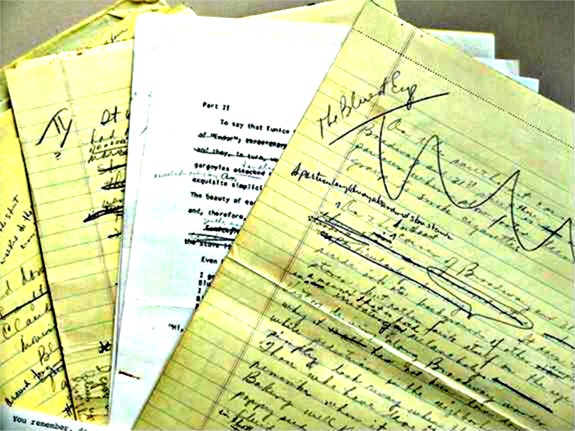
OF NOBEL LAUREATE TONI MORRISON ARE NOW PART OF THE
PERMANENT LIBRARY COLLECTIONS OF PRINCETON UNIVERSITY,
WHERE THE RENOWNED AUTHOR SERVED ON THE FACULTY FOR 17
YEARS.
INCLUDED DRAFTS OF THE BLUEST EYE.
ALSO INCLUDED ARE MATERIALS FOR MORRISON'S CHILDREN'S
LITERATURE, LYRICS, LECTURES, NONFICTION WRITING, A
PLAY, CORRESPONDENCE, DIARIES, PHOTOGRAPHS, COURSE
MATERIALS, VIDEOTAPES AND MORE. fb/tm - 2014
- alumni.princeton.edu
Toni Morrison’s papers
have never been available for research, so I am
confident that they will be an invaluable resource for
literary researchers, including faculty and students
from Princeton, as well as visitors from other
universities and colleges internationally.
curator of manuscripts in the
department of rare books and special collections Don
Skemer
fb/tm - 2014
Toni Morrison è stata
insignita del Premio Nobel
per LA LETTERATURA NEL 1993.
IL SUO PRIMO LIBRO, DEL 1970, L’OCCHIO PIÙ AZZURRO, RIMANE UN
CLASSICO. UNA PICCOLA NERA SOFFRE DI UNA SINGOLARE FORMA DI DISAGIO
E DI CADUTA DELLE ILLUSIONI QUANTO PIÙ LE APPARE IMPOSSIBILE
ASSOMIGLIARE AL MODELLO ESTETICO DI SHIRLEY TEMPLE. ALLA COMUNITÀ
NERA, CUI APPARTIENE, TONI MORRISON HA DEDICATO LA SUA PRODUZIONE
LETTERARIA. COSÌ, LA STORIA DI PARADISO, AMBIENTATA NELLA CITTADINA
DI RUBY IN OKLAHOMA, TRATTA DI UN CONFLITTO GENERAZIONALE E
DELL’ARRIVO “DESTABILIZZANTE” DI CINQUE DONNE, CHE SI RIFUGIANO
NELL’EX-CONVENTO DELLA CITTADINA. COSÌ, ANCHE, LA STORIA D’AMORE E
DI FASCINAZIONE NARRATA NEL SUO RECENTISSIMO LIBRO, AMORE, HA PER
SFONDO LA VICENDA DEI NERI AMERICANI E IL LORO TORMENTATO PERCORSO
DALLA SCHIAVITÙ ALLA CONSAPEVOLEZZA - DALL’ESSERE FACILI BERSAGLI,
SGUARNITI, DI UNA CULTURA DI MASSA TRAVOLGENTE, ALL’ACQUISIZIONE DI
UNA INDIVIDUALITÀ CULTURALE AUTONOMA.
eeditrice.com
TONI
MORRISON 1993 Nobel Laureate in Literature who in novels characterized by visionary force
and poetic import
I stood at the border, stood at the edge and claimed it as central
Claimed it as central, and let the rest of the world move over to
where I was
mi sono messa al confine, al margine, e ne ho rivendicata la
centralità
ne ho rivendicata la centralità e ho lasciato che il resto del mondo
si spostasse dov'ero io
1998 - intervista di jana wendt sull'intenzione di tm di
scrivere futuri romanzi
ilbolive.unipd.it
from toni morrison’s nobel acceptance
speech
she discusses language and the contemporary challenges it
faces: “the systematic looting of language can be recognized by the
tendency of its users to forgo its nuanced, complex, mid-wifery properties for menace and subjugation. oppressive language does more
than represent violence; it is violence; does more than represent
the limits of knowledge; it limits knowledge. whether it is
obscuring state language or the faux-language of mindless media;
whether it is the proud but calcified language of the academy or the
commodity driven language of science; whether it is the malign
language of law-without-ethics, or language designed for the
estrangement of minorities, hiding its racist plunder in its
literary cheek - it must be rejected, altered and exposed. it is the
language that drinks blood, laps vulnerabilities, tucks its fascist
boots under crinolines of respectability and patriotism as it moves
relentlessly toward the bottom line and the bottomed-out mind.
sexist language, racist language, theistic language - all are
typical of the policing languages of mastery, and cannot, do not
permit new knowledge or encourage the mutual exchange of ideas.
legacy-project.org
literature-awards.com
.
Once upon a time there was an
old woman . Blind but wise .
Or was
it an old man? A guru, perhaps . Or a griot soothing restless
children. I have heard this story, or one exactly like
it, in the lore of several cultures . Once upon a time there
was an old woman . Blind . Wise . C’era una volta una vecchia. Cieca, ma
saggia. O era un vecchio? Forse un guru. O un griot che ha il
compito di calmare i bambini irrequieti. Ho sentito questa storia, o
proprio una come questa, nella tradizione di diverse culture. C’era una volta una vecchia. Cieca. Saggia .
.
Why didn't you
reach out, touch us with your soft fingers, delay the sound bite,
the lesson, until you knew who we were? Did you so despise our trick,
our modus operandi you could not see that we were baffled about how
to get your attention ? We are young . Unripe . We have heard all our
short lives that we have to be responsible . What could that possibly
mean in the catastrophe this world has become; where, as a poet said,
"nothing needs to be exposed since it is already barefaced.
Our
inheritance is an affront . You want us to have your old, blank eyes
and see only cruelty and mediocrity. Do you think we are stupid
enough to perjure ourselves again and again with the fiction of
nationhood ? How dare you talk to us of duty when we stand waist deep
in the toxin of your past ?
.
Il sistematico
saccheggio del linguaggio può essere riconosciuto nella tendenza di
coloro che lo usano facendo a meno delle sue proprietà maieutiche
come le sfumature, la complessità, per minaccia e assoggettamento.
Il linguaggio oppressivo fa qualcosa di più che rappresentare la
violenza; è la violenza; fa qualcosa di più che rappresentare i
limiti della conoscenza; limita la conoscenza. Se è il linguaggio
che offusca lo stato o il falso linguaggio dei media stupidi; se è
l’orgoglioso ma imbalsamato linguaggio dell’accademia o il comodo
linguaggio della scienza; se è il linguaggio maligno della legge
senza etica, o il linguaggio fatto apposta per discriminare le
minoranze, nascondere il suo razzistico saccheggio nella sua
sfrontatezza letteraria - esso deve essere rifiutato, modificato e
palesato. È il linguaggio che beve sangue, che piega le
vulnerabilità, che nasconde i suoi stivali fascisti sotto crinoline
di rispettabilità e patriottismo e si muove in fretta e furia verso
la linea inferiore e verso le menti inferiori. Linguaggio sessista,
linguaggio razzista, linguaggio teistico - tutti sono linguaggi
tipici della politica del dominio, e non possono, non permettono
nuove conoscenze né incoraggiano il mutuo scambio di idee … La vitalità della lingua sta nella sua
capacità di descrivere le vite reali, immaginate e possibili di chi
la parla, la legge e la scrive. Sebbene la sua padronanza possa
qualche volta sostituire l’esperienza, essa non è un suo sostituto … Il lavoro della parola è sublime; questo
significa che assicura la nostra differenza, la nostra umana
differenza - il modo nel quale noi siamo, diversi da altre persone
viventi.
Noi moriamo. Questo può essere il significato della vita. Ma noi
creiamo un linguaggio. Questo può essere la misura delle nostre
vite.
nobelprize.org/lecture
. tell us what it is to be a woman so that we may know what it is to
be a man. what moves at the margin.
what it is to have no home in
this place. to be set adrift from the one you knew. what it is to
live at the edge of towns that cannot bear your company.
...
we
die. that may be the meaning of life.
but we do language. that may be the measure
of our lives.
L’Amérique
est en voie d’autodestruction Ce sont
deux grands écrivains.
Deux amis aussi ... l’Américaine Toni Morrison, prix Nobel 1993, et
le
Nigérian Wole Soyinka,
prix Nobel 1986 Vous êtes, tous
les deux, de passage à Paris pour participer à un colloque de l’Académie
universelle des Cultures, dont le thème était cette année la
communauté. Ce thème a-t-il pour vous une importance particulière?
T. Morrison. – Sans doute. J’ai
cherché à montrer que les arts peuvent vous faire prendre conscience
de votre rapport au reste du monde, et vous rendre fier de votre
appartenance ethnique ou nationale. On considère souvent l’art comme
de l’aspirine: dans les situations tragiques, il procure un
soula-gement. Mais en réalité il offre une véritable information, un
authentique savoir, il soude la communauté et vous donne accès à d’autres
sociétés que la vôtre, sans peur de l’inconnu. L’art permet de
révérer sans risque la création d’autrui.
Quelle est, selon vous,
la mission de l’écrivain?
T. Morrison. – La seule question que je me pose en écrivant, c’est
celle de l’approbation des lecteurs. Il ne s’agit pas qu’ils aiment
le livre, mais qu’ils m’accordent leur confiance. C’est une affaire
d’authenticité. Je cherche, en fait, à transcrire des expériences
dans un langage qui soit digne d’eux.
tempsreel.nouvelobs.com
La sua definizione di Bill Clinton come
'primo presidente nero
d'America'
e' stata ripetuta all'ossessione durante battaglia per la Carolina
del Sud, ma ora Toni Morrison ha deciso di puntare su Barack Obama
per mandare il primo afroamericano alla Casa Bianca. La scrittrice
afroamericana ha infatti scritto una lettera di endorsement al
senatore dell'Illinois, che oggi la campagna di Obama ha reso
pubblica
washington adnkronos
non appoggio Obama perché è nero
ma perché è intelligente, integro di
un’autenticità rara.la sua candidatura è come uno dei momenti
singolari che le nazioni possono ignorare solo a loro rischio.
primapress.it
La visione di Obama chiama i nostri angeli migliori
la notte del voto
davanti alla tv ci sarà da divertirsi un sacco . definì Bill Clinton
“il primo presidente nero” per come fu disprezzato dall’establishement
bianco . un Obama presidente andrebbe bene e
sarebbe interessante, avrebbe un certo impatto
alessio altichieri - chelseamia.corriere.it
la gente è diversa il paese
stesso è diverso Con lui si torna all'antica idea del “bene
comune, che ci è mancata da otto anni a questa parte. Uno dei motivi
per cui ho profondo rispetto per lui è che egli si circonda di
persone ‘veramente’ intelligenti, e non di persone intelligenti che
dicono tutto ciò che vuole sentirsi dire. Ama il dialogo, la
discussione, e quello che dice è tutto vero”. cep - ilvelino.it
In America today, post-civil-rights
legislation, white people’s conviction of their natural superiority
is being lost. Rapidly lost. There are “people of color” everywhere,
threatening to erase this long-understood definition of America. And
what then? Another black President? A predominantly black Senate?
Three black Supreme Court Justices? The threat is frightening.
fb/tm - 20.11.2016 - The New Yorker
le nuove generazioni vivono ascoltando musica nera
La cultura a cui sono esposti è nutrita di musica afro-americana
canzoni e balli - ogni
cosa -
Quindi non si sentono a disagio -
non hanno paura
non
pensano piu all'
'altro'
Eravamo showman al soldo dei ricchi bianchi
Eravamo balie, cuochi, facchini, mezzadri.
Chi l'avrebbe mai potuto immaginare. E' stata una strada lunga e
tortuosa. Corriere della Sera - adnkronos
Come avvenne? «Tra schiavi neri e servi bianchi, di fatto
servi della gleba, potevano crearsi alleanze di disgraziati, e da lì
sollevazioni, rivolte. L’istituzionalizzazione della schiavitù dei
neri ha scongiurato il pericolo: formalmente il servo bianco era
libero e il servo nero in catene. Il bianco povero non aveva altro
che la sua supposta libertà, e questa supposta libertà poteva
esprimersi solo nel disprezzo per i neri. Ecco costruito il
palcoscenico per la tragedia del razzismo, che sarebbe andata in
scena durante tutti i tre secoli successivi».
maria grazia minetti - lastampa
LA LETTERATURA
crede che la letteratura possa dare un contributo salvifico agli
orrori che la cronaca ci sta proponendo in questi ultimi tempi?
Ho una grande fede nel fatto che gli intellettuali abbiano in
qualche modo un ruolo da svolgere e una forte responsabilità. Sono
anche consapevole che le peggiori persone al mondo ascoltano o
leggono le migliori opere, dunque c'é un confine molto sottile tra
la disperazione e la speranza: cercare un equilibrio é il
significato di essere oggi al mondo.
wuz.it
la letteratura può cambiare il mondo?
Lo può cambiare, ma lentamente.
Molto di più può fare la cultura popolare. E' un toccasana contro il
razzismo. Dal rap, al jazz alla moda "afro" grazie al cielo la
nostra cultura è ormai un misto di cose diverse. E' la strada da
seguire in futuro.
emilia ippolito -
espresso.repubblica.it - festival mantova 2012
PLAYING IN THE DARK
It is true that I do not want to encourage those totalizing
approaches to African-American scholarship which have no drive other
than the exchange of dominations - dominant Eurocentric scholarship
replaced by dominant Afrocentric scholarship .
More interesting is what makes intellectual domination possible; how
knowledge is transformed from invasion and conquest to revelation
and choice; what ignites and informs the literary imagination, and
what forces help establish the parameters of criticism .
1992
PARADISE A voluntary act
to fill empty hours had become intensive labor streaked with the bad
feelings that ride the skin like pollen when too much about one's
neighbors is known .
.
can we find paradise on Earth? -- Any
white person assembling to instruct free Negroes to read or write
shall be fined not over $50 also be imprisoned not exceeding two
months. It is further enacted that if any white person for pay shall
assemble with slaves for the purpose of teaching them to read or
write he shall for each offence be fined at the discretion of the
justice ten to one hundred dollars --
Toni Morrison speaks to the Telegraph about love, loss and modernity
It was inevitable, therefore, that
when I edited The Black Book, a complex record of African-American
life that I solicited from collectors, the earliest newspapers would
fascinate me, especially the “coloured” ones. There, in photographs
and print so much African-American history – sad, ironic, resistant,
tragic, proud, and triumphant — was on display. Of particular
interest were those printed in the 19th century when my grandfather
spent his few minutes at school. I learnt there were about 50 black
newspapers produced in the southwest following emancipation and the
violent displacement of Native Americans from Oklahoma. The
opportunity to establish black towns was as feverish as the rush for
whites to occupy the land. The “coloured” newspapers encouraged the
rush and promised a kind of paradise to the newcomers: land, their
own government, safety; there were even movements to establish their
own state. tm - telegraph.co.uk - 2014
how much effort do you put into revising your
work? I love
that part
that's the best part,
revision. I do it even after the books are bound! Thinking about it
before you write it is delicious. Writing it all out for the first
time is painful because so much of the writing isn't very good. I
didn't know in the beginning that I could go back and make it better;
so I minded very much writing badly. But now I don't mind at all
because there's that wonderful time in the future when I will make
it better, when I can see better what I should have said and how to
change it. I love that part! jane bakerman - interview - black american
literature forum - summer 1978 fb/tm - 2014
Toni Morrison gives fresh look at the Louvre
PARIS: The
Louvre is inviting slam poets into its gilded galleries to rap about
paintings. If that seems unusual, it is. With Toni Morrison as guest
curator this month, the museum is dreaming up new ways to look at
art.
The American Nobel laureate has helped the Louvre conceive a series
of lectures, readings, films, concerts, debates and slam poetry that
will continue through Nov. 29. All center around her theme "The
Foreigner's Home touching on national identity, exile and the idea
of belonging ...
"What
you think you know about U.S. culture ... much of it, its roots are
from African-Americans. We made modernity in that country."
"The point is that you can use your disadvantages Morrison said.
"Out of disadvantages and energy comes a new thing that has never
been seen before." ass press - nov 2006
Toni Morrison est l'invitée du Musée du Louvre pour une série de
rencontres sur le thème de L'étranger chez soi.
republique-des-lettres.fr
TONI MORRISON
'SLAMS' THE
LOUVRE Toni Morrison's curatorial
stint this month at Paris' Louvre is proving to be extremely popular,
drawing crowds from far beyond the city of lights and its troubled
suburbs. As Il Manifesto's Maria Teresa Carbone reports, the Nobel
laureate has created a program of events that have succeeded in
bringing the "post-black" movement to the venerable museum. "It
could be interesting writes Carbone, "to copy the Louvre's
initiative in Italy." artforum.com
dinamica delle sensazioni
Corps
étrangers: danse, dessin, film. Questa sezione è parte
di un progetto più ampio dal titolo Etranger
chez soi,
voluto dalla scrittrice americana Toni Morrison con la
complicità del Louvre, in cui si esplorano le relazioni
tra la performance e i linguaggi grafici
Enrico
Pitozzi - art-o.net
It was when I was smart
young — I thought I knew everything. I wanted to have a character
live at that time and pass through the U.S. as though it were a
battlefield which it was in a way.
collegiatetimes.com - 2012
some have god’s words others have songs of
comfort
for the bereaved. if i can pluck courage here i would
like to speak directly to the dead - the september dead.
those children of ancestors born in every continent
on the planet asia europe africa the americas…
born of ancestors who wore kilts obis saris geles
wide straw hats yarmulkes goatski wooden shoes
feathers and cloths to cover their hair. but i would not say
a word until i could set aside all i know or believe about
nations wars leaders the governed and ungovernable
all i suspect about armor and entrails. first i would freshen
my tongue abandon sentences crafted to know evil - wanton
or studied explosive or quietly sinister whether born of
a sated appetite or hunger of vengeance or the simple
compulsion to stand up before falling down. i would purge
my language of hypberbole of its eagerness to analyze
the levels of wickedness ranking them calculating their
higher or lower status among others of its kind.
speaking to the broken and the dead is too difficult for
a mouth full of blood. too holy an act for impure thoughts.
because the dead are free, absolute they cannot be seduced by blitz.
to speak to you the dead of september 11 i must not claim
false intimacy or summon an overheated heart glazed
just in time for a camera. i must be steady and i must be clear
knowing all the time that i have nothing to say - no words
stronger than the steel that pressed you into itself no scripture
older or more elegant than the ancient atoms you have become.
and i have nothing to give either - except this gesture
this thread thrown between your humanity and mine
i want to hold you in my arms
and as your soul got shot of its box of flesh to understand
AS YOU HAVE DONE THE WIT OF ETERNITY ITS GIFT OF UNHINGED RELEASE TEARING
THROUGH
the darkness of its knell.
lettura di toni morrison -
festivaletteratura mantova - rainews24 - 2004
the dead of
september 11 2001
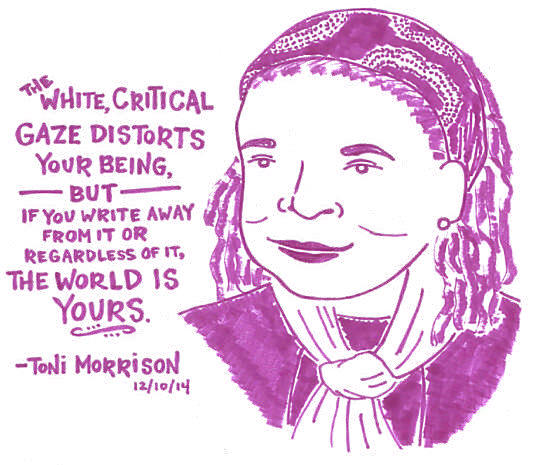
the white critical gaze distorts your being
but if you write away from it or regardless of
it
the world is yours
toni morrison at the new press
social justice awards - 10 dicembre 2014 - fb/tm
.
nella polarità creata dal colore della pelle
si trova non solo il non libero ma anche il non-io
Questo è un vero e proprio terreno di gioco per l’immaginazione
fb/tm toni 18enne
. There is nothing
of any consequence
in education
in the economy
in city planning
in social policy
that does not concern
black people ... Make a
difference about
something other than yourselves
... I always looked
upon the acts of racist exclusion, or insult, as pitiable, from the
other person.
I never absorbed that.
I always thought that there was something deficient
about such people. conversations
i wrote my first novel because i wanted to read it
Too much tail
All that jewelry weighs it down. Like vanity
Can't nobody fly with all that shit
Wanna fly, you got to give up the shit that weighs you
down
the ability of writers to imagine what is not
the self
to familiarize the
strange and mystify the familiar
is the test of their power
when there is pain there are no words. all pain is
the same
if there is a book you really want to read
but it hasn’t been
written yet
then you must write it
what difference do it make if the thing you
scared of
is real or not?
song of solomon
birth life and death
each took place on the hidden side of a leaf
...
Adoro l'Italia perché non è pretenziosa
come la Francia
e ogni volta che ci vado
sono accolta da folle enormi e calorose
On writing The writing is — I'm free from pain It's the place where I live -
it's where I have control - it's
where nobody tells me what to do - it's
where my imagination is fecund and I am really at my best.
Nothing matters more in the world or in my body or anywhere when I'm
writing.
It is dangerous because I'm thinking
up dangerous, difficult things, but it is also extremely safe for me
to be in that place. npr.org - fb/tm - 2015 The
practice of writing makes demands on me that nothing
else really does . tm on ideas - 2002 -
cbc.ca/radio/reading-and-writing
How soon country people
forget When they fall in love with a city it is forever, and it is
like forever.As though
there never was a time when they didn't love it. The minute they arrive at the train station or get off the
ferry and glimpse the wide streets and the wasteful lamps lighting
them, they know they are born for it. There, in a city, they are not so much new as themselves:
their stronger, riskier selves. ... What’s the world for you if
you can’t make it up the way you want it ? jazz
Very, very early in the morning
before they got up. I'm not very good at night. I don't generate
much. But I'm a very early riser, so I did that, and I did it on
weekends. In the summers, the kids would go to my parents in Ohio,
where my sister lives - my whole family lives out there — so the
whole summer was devoted to writing. And that's how I got it done. It seems a
little frenetic now, but when I think about the lives normal women
live — of doing several things — it's the same. They do anything
that they can. They organize it. And you learn how to use time. You
don't have to learn how to wash the dishes every time you do that.
You already know how to do that. So, while you're doing that, you're
thinking. You know, it doesn't take up your whole mind. Or just on
the subway. I would solve a lot of literary problems just thinking
about a character in that packed train, where you can't do anything
anyway. Well, you can read the paper, but you're sort of in there. And then I would think about, well,
would she do this? And then sometimes I'd really get something good.
By the time I'd arrived at work, I would jot it down so I wouldn't
forget. It was a very strong interior life that I developed for the
characters, and for myself, because something was always churning.
There was no blank time. I don't have to do that anymore. But still,
I'm involved in a lot of things, I mean, I don't go out very much. 2016 - fb/toni
morrison - thisrecording.com
THE SOURCE OF SELF-REGARD
THE ORIGIN OF OTHERS The Bluest Eye
Sula
Song of Solomon
Tar Baby
Beloved
Jazz
Paradise
Love
A Mercy
Home
God Help the Child SWEETNESS
CONVERSATIONS
1977 National
Book Critics Circle Award
1977 American
Academy and Institute of Arts and Letters Award
1987–88Robert F. Kennedy Book
Award
1988 Helmerich
Award
1988 American
Book Award
1988 Anisfield-Wolf
Book Award in Race Relations
1988 Pulitzer
Prize for Fiction
1988 Frederic
G. Melcher Book Award
1989 MLA
Commonwealth Award in Literature
1993 Nobel
Prize for Literature
1993 Commander
of the Arts and Letters Paris
1994 Condorcet
Medal Paris
1994 Pearl
Buck Award
1994 Rhegium
Julii Prize for Literature
1996 Jefferson
Lecture
1996 National
Book Foundation's Medal of Distinguished Contribution to American
Letters
2000 National
Humanities Medal
2002100 Greatest African Americans
2005 Honorary
Doctorate of Letters from Oxford University
2008 Grammy
Awards Best Spoken-Word Album for Children
2009 Norman
Mailer Prize, Lifetime Achievement
2010 Officier
de la Légion d'Honneur
2011 Honorary
Doctor of Letters at Rutgers University Graduation Commencement
2011 Honorary
Doctorate of Letters from the University of Geneva
2012Presidential Medal of Freedom
2013The Nichols-Chancellor's Medal awarded by Vanderbilt
University
2014
Ivan Sandrof Lifetime Achievement Award 2015 UCLA
MEDAL
2016 PEN/Saul Bellow Award
for Achievement in American Fiction
2016 mcdowell medal
lifetime achievement honor 2016
Emerson-Thoreau Medal - the American Academy of Arts and
Sciences 2017
authors guild distinguished service awards 2017
PRINCETON UNIVERSITY naming 2018
honor for a Lifetime of Excellence in Fiction - Center for Fiction
- ny 2019
American Academy of Arts and Letters' gold medal
for fiction
PREMIO
SPECIALE GRINZANE CAVOUR2006
prima donna di colore a ricevere il Premio Nobel per
la Letteratura.
Toni Morrison
attualmente vive tra Rockland County, nello stato di New York, e
Princeton, dove è docente di letteratura presso l'università.
Violenza, razzismo, schiavitù, discriminazione, rapporti tra generi,
sono gli argomenti che ritornano in tutti i suoi ROMANZI , vicende
sanguinarie, terrificanti, ma anche tenere, che vogliono ridare voce
agli afro-americani, farli uscire dal silenzio e raccontare la loro
storia. non certo "leggeri", ma capaci di far discutere
e di spaccare l'opinione pubblica. grinzane.it
Princeton University 2017
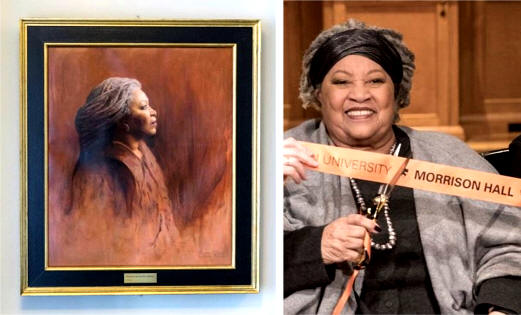
Princeton University's trustees have approved
recommendations to name West College, a prominent and
central campus building, for the Nobel laureate Toni
Morrison, an emeritus faculty member at Princeton . princeton.edu - 2017 Effective Saturday, July 1, the West College
building on the Princeton University campus will be
named in honor of Nobel laureate and emeritus faculty
member Toni Morrison. fb/tm
- 2017
Princeton University dedicated the naming of Morrison
Hall in honor of Toni Morrison, the Robert F.
Goheen Professor in the Humanities, Emeritus, and the
recipient of the 1993 Nobel Prize in Literature.
Morrison was the first African American to be awarded
the prize. fb/tm -
22.11.2017 princeton.edu
IN VENDITA La sua collezione privata di libri - più di
1.200
it.finance.yahoo.com
- novembre 2020
I am a black writer. No
hiding. It’s different. do
you still write early in the morning? No ! Now I can’t do it.
I wake up that same time, but the physical stuff is so different
now. I write in the evening, at 6 or 7pm. do you write every day? No. I think every day. Sometimes
I can do three pages, sometimes I do half of one. It’s not so much
the amount as what’s clear in my mind, or what I want to develop. is black literature still alive today? It has moved. The music of
black people was the most important thing, and then finally it moved
and the black writing and literature became important.
Now it’s nothing to single out.
have you had a good life? I have
lived a long life, and it’s good.
will you keep writing? Oh yeah.
My best novel is Jazz, but nobody cares about it but
me. interview alain elkann -
alainelkanninterviews.com - 2018
.
ascolta: è la
condizione in cui si trova la nostra condizione .
tutti vogliono la vita di un nero . tutti. i
bianchi ci vogliono morti, zitti zitti, che poi è lo stesso che
morti . le donne bianche ? lo stesso, sai.
ci vogliono universali, umani, senza coscienza di razza,
addomesticati, tranne che a letto. a letto
un po' di movimento razziale gli fa benissimo .
ma fuori dal letto vogliono che siamo degli individui .
tu gli dici : 'ma hanno linciato mio padre ' .
e loro ti rispondono : 'si, ma tu sei meglio di chi ha
linciato tuo padre, dunque dimentica ' . amore - love -
2003
.
Write what you want to read
I wrote the first book because I wanted to read it. I thought that
kind of book, with that subject—those most vulnerable, most
undescribed, not taken seriously little black girls—had never
existed seriously in literature. No one had ever written about them
except as props. Since I couldn’t find a book that did that, I
thought, “Well, I’ll write it and then I’ll read it.” It was really
the reading impulse that got me into the writing thing. 2014 - nea arts magazine - lithub.com