. versione a fumetti di tom king e peter gross - 2023
BREVE ANALISI - CRITICA
All the habits of Man are evil. And, above all, no
animal must ever tyrannise over his own kind. Weak or strong, clever or simple, we are all brothers.
No animal must ever kill any other animal. All animals are equal.
tutte le abitudini dell'uomo sono il male. E, soprattutto,
nessun animale deve mai tiranneggiare sopra il suo stesso
genere. Debole o forte, intelligente o semplice, siamo tutti
fratelli. Nessun animale deve mai uccidere nessun altro animale.
Tutti gli animali sono uguali.
...
Man is the only creature that consumes without producing. He
does not give milk, he does not lay eggs, he is too weak to pull
the plough, he cannot run fast enough to catch rabbits. Yet he
is lord of all the animals. He sets them to work, he gives back
to them the bare minimum that will prevent them from starving,
and the rest he keeps for himself .
L'uomo è l'unica creatura che consuma senza produrre. Egli non
dà latte, non fa uova, è troppo debole per tirare l'aratro, non
può correre abbastanza velocemente per prendere conigli.
E tuttavia è il re di tutti gli animali .
Li fa lavorare e in cambio dà ad essi quel minimo che impedisca
loro di morir di fame e tiene il resto per sé stesso .
...
If she herself had had any picture of the future, it had been of
a society of animals set free from hunger and the whip, all
equal, each working according to his capacity, the strong
protecting the weak, as she had protected the lost brood of
ducklings with her foreleg on the night of Major's speech .
...
Now, comrades, what is the nature of this life of ours ?
Let us face it : our lives are miserable, laborious, and short.
We are born, we are given just so much food as will keep the
breath in our bodies, and those of us who are capable of it are
forced to work to the last atom of our strength; and the very
instant that our usefulness has come to an end we are
slaughtered with hideous cruelty. No
animal in England knows the meaning of happiness or leisure
after he is a year old. No animal in
England is free. The life of an
animal is misery and slavery: that is the plain truth .
...
Whenever anything went wrong it became usual to attribute it to
Snowball. If a window was broken or a
drain was blocked up, someone was certain to say that Snowball
had come in the night and done it, and when the key of the
store-shed was lost, the whole farm was convinced that Snowball
had thrown it down the well. Curiously enough, they went on
believing this even after the mislaid key was found under a sack
of meal . animal farm - 1945
. The enemy is the gramophone mind
whether or not one agrees with the record that is being played
at the moment
The cartoon that
came in from the cold For George odifreddi, orwell, there
was nothing pro-American about Animal Farm. The CIA, however,
had other ideas. Karl Cohen tells the remarkable story of
how US intelligence secretly funded a landmark British movie
the guardian America's use of
animated propaganda during the second world war is fairly well known, but
propaganda made after the iron curtain went up is rarely seen or discussed.
By the late 1940s, the CIA was spending tax dollars creating culture as a
secret weapon to combat communism around the world. When Frances Stonor
Saunders published Who Paid the Piper? The CIA and the Cultural Cold War,
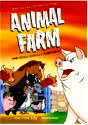
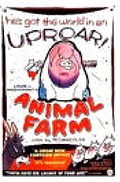
she mentioned a single animated film, John Halas and Joy Batchelor's Animal
Farm, which was made in 1954.
The CIA's choice of George Orwell's Animal Farm to produce as an animated film
almost makes sense. Almost, but not quite, because the book's ending shows both
the pigs and humans joined together as corrupt and evil powers. To use Animal
Farm for its purpose, as Stonor Saunders reveals, the CIA's Office of Policy
Coordination, which directed covert government operations, had two members of
their Psychological Warfare Workshop staff obtain the screen rights to the novel.
Howard Hunt, who became infamous as a member of the Watergate break-in team, is
identified as head of the operation. His contact in Hollywood was Carleton Alsop,
brother of writer Joseph Alsop, who was working undercover at Paramount. Working
with Alsop was Finis Farr, a writer living in Los Angeles.
It was Alsop and Farr who went to England to negotiate the rights to the
property from Sonia Orwell. Mrs Orwell probably knew Farr as she moved in
literary and artistic circles as an assistant to the editor of Horizon magazine.
This is well documented in The Girl from the Fiction Department by Hilary
Spurling. Mrs Orwell signed after Alsop and Farr agreed to arrange for her to
meet her hero, Clark Gable. "As a measure of thanks", a CIA official named Joe
Bryan made the arrangements for the meeting, according to The Paper Trail,
edited by Jon Elliston.
Hunt selected Louis De Rochemont to be the film's producer at Paramount. Before
the war, in 1935, De Rochemont had created The March of Time, a new form of
screen journalism that combined the newsreel and documentary film into a 15- to
20-minute entertaining short that went behind the news to explain the
significance of an event. The March of Time, sponsored by the Time-Life Company,
was a popular monthly series for over a decade before ending in 1951.
Hunt probably chose De Rochemont because he had once worked for him on The March
of Time series. De Rochemont had also worked on socially and politically
sensitive films for many years. He produced the anti-Nazi spy film The House on
92nd Street (1945) and Lost Boundaries (1949), one of the first racially aware
films (it is about a black doctor who passes for white until he is unmasked by
the black community).
A recently published book, British Cinema and the Cold War: the State,
Propaganda and the Consensus by Tony Shaw, suggests De Rochemont chose Halas and
Batchelor to animate the film as production costs were lower in England and
because he questioned the loyalty of some American animators. The House
Un-American Activities Committee hearings on communists in the film industry
began in earnest in 1951 (Disney testified at short-lived hearings that were
held in 1947) and several people in the animation industry were blacklisted,
careers were ruined or disrupted.
On the other hand, Vivien Halas, daughter of the film's co-directors John Halas
and Joy Batchelor, suggests the real reason they got the contract is that Louis
De Rochemont was a Navy buddy and good friend of screenwriters-producers Philip
Stapp and Lothar Wolff. De Rochemont had worked with them in the Navy's film
unit and Vivien's mother had worked closely with Stapp in 1949 on a Marshall
Plan film produced by Halas and Batchelor, The Shoemaker and the Hatter.
Eventually Stapp and Wolff would be hired to work on Animal Farm's script.
Although the decision on what firm to hire came at a bleak moment for some
American animation companies (the film could have been produced in Los Angeles
by a studio whose reputation was beyond reproach), I suspect Halas and
Batchelor's reputation, personal friendships and budgetary restraints were
important factors in the decision to award them the contract.
Animal Farm was the first animated feature produced in England. John Halas
(1912-1995) was born in Budapest and had worked as an animator before moving to
Paris. He moved to England and in 1940 formed Halas and Batchelor with Joy
Batchelor (1914-1991), a British animator and scriptwriter. They were married a
year later. During the war they were kept busy with training, propaganda and
other forms of government-sponsored films.
The animation firm was awarded the contract to make the feature in November 1951
and it was completed in April 1954. It is logical to assume that before the
contract was signed De Rochemont made it quite clear that the film would not be
identical to the book and he may have had a rough script or other guidelines.
Vivien says that during the production, the script went through several changes
before it was finalised.
The production employed about 80 animators. In Halas's book The Technique of
Film Animation, 1959, he states that the film's target audience was adults
rather than children and that they needed to simplify the plot. Vivien Halas
adds that the film wasn't shown in Paris until the 1990s as it was considered
too anti-communist. When it finally premiered in Paris about 1993, the mayor of
Aubervilliers (a suburb of Paris) "introduced it as a tribute to communism! My
father said no, this is not communist or anti-communist. It is a fable for all
time. It is anti-totalitarian and it has a humanist message." In a letter to the
animation historian Giannalberto Bendazzi in 1981, Joy Batchelor told him they
wanted to make a film about freedom.
Besides having Philip Stapp and Lothar Wolff working on the script with Joy
Batchelor, De Rochemont had another friend from their days in the Navy's film
unit working on the project. Borden Mace became president of the company set up
to produce Animal Farm by De Rochemont, his mentor. Mace told Vivien in an
interview in 2002 that De Rochemont had the ultimate say about script changes.
While it isn't clear who suggested the ending used, it was certainly what the
CIA needed. To meet the CIA's objectives, the ending was changed to show that
only the pigs had become totally corrupt. The film ends with other animals
mounting a successful revolt against their rulers. There is no mention of the
humans in the film's conclusion.
Vivien recalls, "The changes came about as the film evolved. There were at least
nine versions of the script and heated discussions about the end. My mother
especially felt it was wrong to change the ending." She has a tape recording of
her father saying that the ending they used offers a glimmer of hope for the
future. In an interview on British television in 1980, he defended the ending as
being necessary to give the audience hope for the future. "You can not send home
millions in the audience being puzzled."
While the film was in production, Fredric Warburg, the book's publisher, visited
the studio several times and viewed the work-in-progress. Saunders thinks he may
have suggested that old Major, "the prophet of the Revolution, should be given
the voice and appearance of Winston Churchill". More importantly, she reveals
earlier in her book that Warburg had dealings with the British intelligence
group MI6. He fronted for them by taking their cheques, depositing them and then
writing personal checks that he gave to Encounter, an anti-communist liberal
literary publication. He may or may not have been a "consultant", helping to
ensure that the film would be a successful propaganda tool.
Howard Beckerman (animator and author of Animation, the Complete Story) comments:
"Halas and Batchelor had to compete in the world market with Disney, so a few
cartoon gags were introduced into the film to lighten its heaviness, and I
believe that whatever the CIA's influence might have been, the choice for an
upbeat ending came out of the animator's wish to succeed with the audience.
There were movies of the period like the live film, My Son John (1952), which
attacked the menace of communism head-on in a contrived and obvious fashion, so
I guess anything is possible. If Orwell had lived longer, I suspect he would
have vetoed any effort to translate his work into such a film."
The film did well at the box office and the reviews were favourable, but some
critics suggested people should read the book to learn what was left out. The
film was later distributed around the world by the United States Information
Agency (USIA) through its overseas libraries. It has also been suggested that
the film and book were excellent propaganda in Arab nations "in view of the fact
that both pigs and dogs are unclean animals to Muslims" - according to an
Egyptian embassy official quoted in the Guardian.
When asked if Vivien's parents were aware of the CIA's involvement with the
project she said, "I don't believe that my parents were aware of any CIA
involvement at the time. Frances reminded me that, in the early 1950s, the CIA
was not regarded with the same scorn as today." By the 1980s her parents had
heard rumours concerning the CIA's involvement. She says, "My father dismissed
the idea, but my mother felt annoyed."
Thanks to Saunders's research we now know that Orwell's 1984 was made into a
live-action feature with funds from the CIA. Work on the British production
began in 1954, and, as with the animated Animal Farm, the ending was changed. We
also know that the British government saw Orwell's work as useful for propaganda
purposes: in March 1998 the Public Record Office declassified documents
revealing that the government funded a newspaper comic strip in the early 1950s
based on Animal Farm. It ran in several countries including Brazil, Burma,
Eritrea, India, Mexico, Thailand and Venezuela.
On a few occasions the CIA's failures have been disclosed to us by the news
media, but their successes are almost never made public. No matter how you feel
about their meddling with feature films, it appears their involvement in the
making of Animal Farm was a successful covert operation and it was kept a secret
from the public for almost 50 years.
www.guardian.co.uk/culture/2003/mar/07/artsfeatures.georgeorwel
Twelve voices were shouting in anger, and they were all alike. No question, now,
what had happened to the faces of the pigs. The creatures outside looked from
pig to man, and from man to pig, and from pig to man again; but already it was
impossible to say which was which.
animal farm
.
Se votare facesse qualche differenza non ce lo
lascerebbero fare.
Il sistema è ideato affinchè pochi tecnocrati
controllino tutti gli schieramenti in competizione alle elezioni.
Il popolo ignaro di questo
grazie al silenzio complice dei media vota con l'illusione di essere lui a
scegliere qualcosa. mark twain
Tutti i personaggi e gli avvenimenti trovano il loro
corrispondente storico: Vecchio Maggiore – Marx/Lenin
Napoleon – Stalin
Palla di Neve – Trotsky
Boxer (o Gondrano) – Stachanov
Berta (o Trifoglio) – la povera gente russa, onesta e manipolata
Mosè – I preti
Mollie – La nobiltà
I cani – la spietata polizia sovietica
Le pecore – la gente manipolabile che canta le lodi della rivoluzione senza
pensare
Jones – lo Zar Nicola II
Pilkington – La Francia e l’Inghilterra
Frederick – La Germania .
INTRODUZIONE George orwell, nacque in India nel 1903 (con il nome di Eric Arthur Blair, da
una famiglia di origine scozzese) scrisse tra il 1943 e il 1944 “ La Fattoria degli Animali” :
una favola in chiave parodistica della riuscita iniziale, del graduale
tradimento e del successivo
fallimento della rivoluzione sovietica.
Il libro è ambientato in Inghilterra quando l’attività agricola veniva praticata
prevalentemente
nell’ambito di piccole fattorie padronali.
CRITICA Questo libro da
Giorgio Manganelli è considerato amaro e duro, come duro ne è lo stile,
purissimo,
d’una intensità prodigiosa, quasi una somma enorme di sdegno si fosse lasciata
chiudere a fatica, ma totalmente : degno di Swift.
Per Giorgio Monicelli, Orwel ride amaro ; ma non solo Swift gli insegna
qualcosa : Esopo stesso, Fedro non sono del tutto estranei
alla morale dei suoi scritti, anche se l’amarezza del riso lo avvicina alla dura passionalità
della razza britannica. La sua sfiducia nelle possibilità del riscatto sociale dell’uomo è appariscente :
infatti, quando lo statuto degli
animali che hanno conquistato la fattoria con una rivoluzione vittoriosa viene ridotto a un solo
articolo :
...
Beniamino fece uno strappo alla regola e le lesse cosa c'era
scritto
Restava uno solo, unico comandamento. Eccolo :
tutti gli animali sono
uguali
ma alcuni sono più uguali degli altri
All animals are equal but some animals are more equal than others
si è portati a credere che
egli non s’illuda più sulla capacità dell’uomo di superare i propri istinti di
sopraffazione dei suoi simili, e non ritenga se non una
vana utopia l’aspirazione a una società migliore.
Aldo Tagliaferri dice, che come molti suoi connazionali, Orwel non temeva che
gli interessi per i problemi sociali influissero
negativamente sull’arte DEL ROMANZo , e proprio per questo si poteva permettere il lusso, precluso agli
anacoreti del formalismo, di organizzare feroci parodie di ideologie scadute o
truffaldine. Tutti ricordano la celebre fattoria degli animali.
Anche l’ultima scena, dice Raymond William, in cui gli animali guardano
dall’uomo al maiale, dal maiale all’uomo, e non sanno più
distinguere l’uno dall’altro, è testimonianza di un sentimento ancora più profondo
della delusione e della sconfitta. Rendendosi conto che essi sono
uguali perché agiscono allo stesso modo, non badano più
alle etichette e alle formalità : questo momento, in cui acquistano, coscienza,
rappresenta una scoperta liberatoria. Nella sua misura
ridotta e nei suoi limitati termini, la fattoria degli animali possiede un’energia radicale che va
ben oltre al fatto occasionale della sua apparizione e si assicura la propria
durevolezza...
La fattoria degli animali è una favola in chiave parodistica della riuscita
iniziale, del graduale tradimento e del definitivo
fallimento della rivoluzione sovietica.
Nella parodia orwelliana, gli animali di una fattoria languono in una miserabile
e amara esistenza di sfruttamento, di maltrattamenti
e di umiliazione sotto la sferza di un padrone brutale e avido. Finalmente gli animali, esasperati, si ribellano e combattono affinché la
fattoria si trasformi in una società giusta.
...
ANALISI
DEI PERSONAGGI Personaggio di
importanza fondamentale per lo svolgimento DEL ROMANZo , anche se protagonista
per brevissimo tempo è il verro
più anziano della fattoria: il Vecchio Maggiore, che è l’ispiratore della ribellione degli
animali contro l’oppressore: il padrone.
Infatti egli riteneva che le dure condizioni cui erano sottoposti erano causate
dall’uomo, unica creatura che consuma senza
produrre. Figura positiva, intelligente, saggia e serena. Il protagonista in assoluto DEL ROMANZo è Napoleon, un grosso verro dall’aspetto
feroce: taciturno con la fama di voler
sempre fare a modo suo (caratteristica che non perderà).
Intelligente, crudele, ambizioso e tenace riesce a sottomettere tutti e pur di
avere il potere e gli onoriche da esso derivano. Non esita a
far uccidere molti animali innocenti, tra cui anche dei maiali, che pensava potessero
intralciarlo.
Privo di qualsiasi sentimento positivo, impone gradualmente condizioni di vita
sempre più dure per le sue manie di
grandezza.
Palla di Neve, altro personaggio di rilievo è un giovane verro vivace, arguto
intelligente con molta inventiva, ma di minor
profondità di carattere di Napoleon, ma anche l’unico in grado di controbatterlo, pertanto viene
presto scacciato con l’infamante accusa di tradimento.
Figura di ingegno, coraggio e
fantasia che tuttavia viene espulso ingiustamente,
perché pensava un po’ anche agli interessi degli altri animali.
Personaggio chiave DEL ROMANZo e Clarinetto, un giovane suino dalle notevoli
capacita oratorie, tiene i rapporti con gli animali,
motiva i comportamenti di Napoleon come assolutamente indispensabili per il benessere e
la sopravvivenza di tutta la comunità. Travisa i fatti, mascherandone l’estrema
crudeltà,sembra dalla parte dei sottomessi mentre è asservito al volere del Capo, mente sempre, per
tenere tutti sottomessi , e mantenere anche i propri privilegi.
Gondrano, il cavallo, è la figura più positiva tra tutti gli animali, ingenuo
credulone non sembra riflettere, da subito disposto a lavorare
sempre di più, gli sembra l’unica cosa più giusta da fare: si identifica nella massa, fa ciò
che ad essa è richiesto. Per il suo aspetto e la sua forza avrebbe potuto assumere un ruolo ben
diverso nella comunità ma la sua eccessiva fiducia nei dirigenti non gli consente di capire e reagire
alle pessime condizioni di vita in cui egli stesso è costretto.
Forse il suo esempio ha contribuito a rendere gli animali sempre più subordinati
e rassegnati.
L’estrema crudeltà con cui alla fine viene trattato evidenzia che nemmeno la più
onesta e disarmante fedeltà è rispettata. da
tiscali.it/appuntiericerche/Relaz.librinoti/Fattoria.HTML
LA FATTORIA DEGLI ANIMALI Questo libricino, che ad una prima occhiata, può sembrare una favola per
bambini, racchiude al suo interno
un’intensa riflessione sul concetto di dittatura, di privazione dei diritti e di strumentalizzazione
dell'uomo (in questo caso sono rappresentati da animali). La storia è semplice e nota a tutti: una
fattoria, popolata da animali parlanti, è gestita da un despota che non lascia vivere in pace e tranquillità
gli animali (essi sono costretti a sconvolgere i propri ritmi
fisiologici per soddisfare i bisogni del padrone); questi ultimi si ribellano e iniziano una
sorta di autogestione basata sul
principio di eguaglianza fra tutte le bestie e di divisione
"equa" del lavoro. In principio tutto va per il meglio: gli animali sono contenti, il cibo è
abbondante per tutti e si lavora con più motivazione
sapendo che ogni cosa è fatta per soddisfare i propri bisogni e quelli della
"comunità".
Col passare del tempo, come spesso accade, si inizia a creare una sorta di
gruppo (in questo caso i maiali), che inizia ad
elevarsi al di sopra degli altri animali, evocando una sorta di intelligenza
superiore: è subito scontro tra
due maiali con ideali diversi: Napoleon e Palla di neve, il primo vince e riesce
a far scacciare il secondo
per aver commesso il crimine di essersi opposto al nuovo comandante.
Pian piano il nuovo capo comincia a sfruttare gli animali nello stesso e
identico modo con cui venivano sfruttati
tempo prima dal vecchio padrone. La situazione degenera fino al momento in cui i maiali restano prigionieri degli
stessi vizi e degli stessi difetti degli
umani, frantumando tutti gli ideali di uguaglianza della rivoluzione, e
presentandosi agli altri animali
eretti su due zampe. La meraviglia fu grande, ma gli animali si dovettero rendere conto che erano
tornati alla stessa condizione di
schiavitù (se non peggio!) contro cui avevano lottato e si erano battuti con
grande coraggio e con
tanta speranza. I riferimenti storico-sociali sono chiari e
immediati, specialmente se si pensa al periodo in cui è stato scritto: il 1943 fu l'anno
della stesura, mentre il 1945 fu quello della pubblicazione, che avvenne
proprio alla fine della guerra per evitare che i contenuti potessero lesionare
qualche "grande schieramento". Infatti è chiaro che il regime totalitario più criticato da George Orwell
fu quello sovietico che era proprio partito su
basi egualitarie, fornendo a tutti le stesse opportunità.
Questa come si sa, fu la teoria, mentre nella pratica avvenne la degenerazione
immediata di tutto il nuovo sistema, che
portò alla disintegrazione di tutto un gruppo di paesi che sta pagando ancora
oggi le amare
conseguenze.
Orwell che a questo non poteva restare estraneo, dato il grande impegno politico
dei suoi libri, decise di scrivere
questo breve racconto in chiave "umoristica" e scherzosa che in un primo momento può sembrare
scritto per dei bambini ma, facendo un'analisi più minuziosa, ci si rende
immediatamente conto del carattere
fortemente corrosivo del "libricino", ancora capace a distanza di cinquant'anni
di sconvolgere e
di rappresentare un documento crudo e reale di ogni tipo di rivoluzione (nata
per distruggere
un'oppressione e crearne inevitabilmente un'altra). Sicuramente con 1984 si arriva ad una più lucida
e corrosiva critica di ogni regime che schiaccia le libertà dell’uomo, ma La fattoria degli
animali rimane sotto tutti i punti di vista un libro imperdibile
che mette in luce anche le grandi paure che gli uomini avevano in quel
periodo storico.
Elton John si
dà al musical con La fattoria
degli animali - 2010
andy serkis
porta sul grande schermo La Fattoria degli Animali
- 2018
*
Gli animali da fuori guardavano il maiale e poi l'uomo
poi l'uomo e ancora il maiale
ma era ormai impossibile dire chi era l'uno e chi l'altro
When I sit down to write a book, I do not say to myself
I am going to produce a work of art .
I write it because there is some lie that I want to expose
some fact to which I want to draw attention
and my initial concern is to get a hearing
.
Uno scrittore scrupoloso,
per ogni frase che compone, si porrà almeno quattro domande,
e cioè :
. cosa sto cercando di dire ?
. quali parole possono
esprimerlo ?
. quali immagini o
espressioni lo renderanno più chiaro ?
. è questa immagine fresca
abbastanza da suscitare un certo effetto ?
E poi probabilmente se ne farà altre due
:
. posso dirlo più in breve ?
. ho scritto qualcosa di
inutilmente brutto ? - GO
libreriamarcopolo.wordpress.com
.
REGOLE PER UNA BUONA SCRITTURA 1 -
Never use a metaphor, simile, or other figure of speech which you are used
to seeing in print 2 -
Never use a long word where a short one will do 3 -
If it is possible to cut a word out, always cut it out 4 -
Never use the passive where you can use the active 5 -
Never use a foreign phrase, a scientific word, or a jargon word if you can
think of an everyday English equivalent 6 -
Break any of these rules sooner than say anything outright barbarous politics and the english language - 1946
mtholyoke.edu 1 - Mai usare una metafora, una similitudine o
altra figura retorica che vedete normalmente sui giornali 2 - Mai
usare una parola lunga se una breve funziona ugualmente 3 - Se si
può togliere una parola, toglietela sempre 4 - Mai usare il passivo
quando potete usare l’attivo 5 - Mai usare una frase straniera, un
termine scientifico, o una parola gergale se sapete l’equivalente in inglese
comune 6 - Piuttosto che scrivere una cosa orrenda ignorate le
regole precedenti
.
.
In the essayWHY I WRITEpublished in 1947 Orwell says "...In a peaceful age I might have written ornate or merely descriptive books,
and might have remained almost unaware of my political loyalties. As it is I
have been forced into becoming a sort of pamphleteer. First I spent five years
in an unsuitable profession (The Indian Imperial Police, in Burma), and then I
underwent poverty and the sense of failure. This increased my natural hatred of
authority and made me for the first time fully aware of the existence of the
working classes, and the job in Burma had given me some understanding of the
nature of imperialism: but these experiences were not enough to give me an
accurate political orientation. Then came Hitler, the Spanish Civil War, etc. By
the end of 1935 I had still failed to reach a firm decision. The Spanish war and
other events in 1936-37 turned the scale and thereafter I knew where I stood.
Every line of serious work that I have written since 1936 has been written,
directly or indirectly, against totalitarianism and for democratic socialism, as
I understand it. It seems to me nonsense, in a period like our own, to think
that one can avoid writing of such subjects. Everyone writes of them in one
guise or another. It is simply a question of which side one takes and what
approach one follows. And the more one is conscious of one's political bias, the
more chance one has of acting politically without sacrificing one's aesthetic
and intellectual integrity."
Embrace the ego revel in beauty and
write with a purpose They exist in different degrees in every writer, and in any
one writer the proportions will vary from time to time, according to the
atmosphere in which he is living.
They are
1 - Sheer egoism
Desire to seem clever, to be talked about, to be
remembered after death, to get your own back on the grown-ups who snubbed you in
childhood, etc., etc. It is humbug to pretend this is not a motive, and a strong
one. Writers share this characteristic with scientists, artists, politicians,
lawyers, soldiers, successful businessmen—in short, with the whole top crust of
humanity. The great mass of human beings are not acutely selfish. After the age
of about thirty they almost abandon the sense of being individuals at all—and
live chiefly for others, or are simply smothered under drudgery. But there is
also the minority of gifted, willful people who are determined to live their own
lives to the end, and writers belong in this class. Serious writers, I should
say, are on the whole more vain and self-centered than journalists, though less
interested in money.
2 - Aesthetic enthusiasm
Perception of beauty in the external world, or, on the
other hand, in words and their right arrangement. Pleasure in the impact of one
sound on another, in the firmness of good prose or the rhythm of a good story.
Desire to share an experience which one feels is valuable and ought not to be
missed. The aesthetic motive is very feeble in a lot of writers, but even a
pamphleteer or writer of textbooks will have pet words and phrases which appeal
to him for non-utilitarian reasons; or he may feel strongly about typography,
width of margins, etc. Above the level of a railway guide, no book is quite free
from aesthetic considerations.
3 - Historical impulse
Desire to see things as they are, to find out true facts
and store them up for the use of posterity.
4 - Political purpose
Using the word 'political'
in the widest possible sense. Desire to push the world in a certain direction,
to alter other peoples' idea of the kind of society that they should strive
after. Once again, no book is genuinely free from political bias. The opinion
that art should have nothing to do with politics is itself a political attitude.
... All writers are
vain, selfish, and lazy
and at the very bottom of
their motives there lies a mystery. Writing a book is a horrible, exhausting
struggle, like a long bout of some painful illness. One would never undertake
such a thing if one were not driven on by some demon whom one can neither resist
nor understand. For all one knows that demon is simply the same instinct that
makes a baby squall for attention. And yet it is also true that one can write
nothing readable unless one constantly struggles to efface one's own personality.
Good prose is like a windowpane. I cannot say with certainty which of my motives
are the strongest, but I know which of them deserve to be followed. And looking
back through my work, I see that it is invariably where I lacked a POLITICAL
purpose that I wrote lifeless books and was betrayed into purple passages,
sentences without meaning, decorative adjectives and humbug generally.
Why I Write - 1946
theatlantic.com - orwell.ru - tegeorge.com
Read with care, George Orwell’s diaries, from the years 1931 to 1949, can
greatly enrich our understanding of how Orwell transmuted the raw material of
everyday experience into some of his best-known novels and polemics. They
furnish us with a more intimate picture of a man who, committed to the struggles
of the mechanized and “modern” world, was also drawn by the rhythms of the wild,
the rural, and the remote.
diari - pubblicati per la prima volta in america
- 2012
christopher hitchens - died in 2011 - immagine andré carrilho - vanityfair.com
- guardian.co.uk
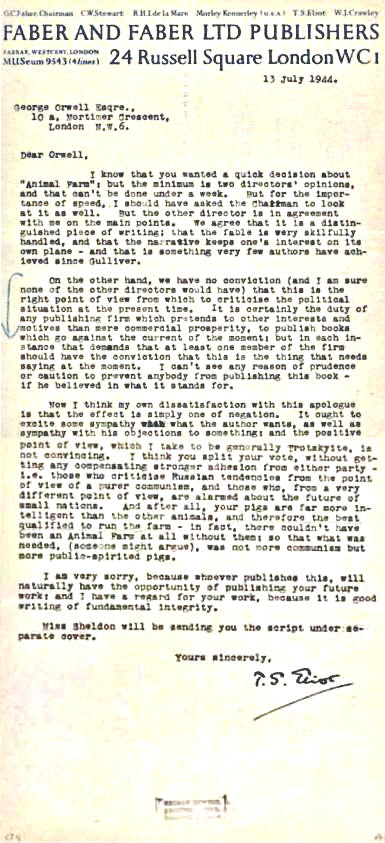
When Orwell received this rejection of Animal Farm
from the Faber & Faber publishing house, he couldn't
even dismiss it by saying the reader didn't know what he was talking about
- the rejection came from brilliant poet T.S.
Eliot. - Your pigs
are far more intelligent than the other animals, and therefore the best
qualified to run the farm - in fact, there couldn’t have been an animal farm
at all without them: so that what was needed, (someone might argue), was not
more communism but more public-spirited pigs.
- historybuff.com - fb/go
- 2016
.
Letter from T S Eliot (Faber) to George
Orwell rejecting Animal Farm, 13 July 1944 ... Eliot expresses his doubts that Orwell’s
allegory ‘is the right point of view from which to criticise the political
situation at the present time’. bl.uk - 2016 ... Se una casa editrice pretende
di avere interessi e motivazioni che vadano oltre alla mera prosperità
commerciale, è certamente nel suo dovere pubblicare questo libro ... Non vedo
ragioni di cautela o prudenza che impediscano a chiunque di pubblicarlo, se
credesse in ciò che rappresenta ...
Dopotutto, i suoi maiali sono molto più intelligenti degli altri animali, e
quindi i più qualificati a gestire la fattoria – infatti, senza di loro, non
avrebbe potuto esserci nessuna fattoria degli animali: pertanto, ciò che
occorreva (argomenterebbero alcuni) non era più comunismo, ma maiali con più
senso civile. federica colantoni - cultora.it - 2016
highly civilized
human beings are flying overhead trying to kill me. They do
not feel any enmity against me as an individual, nor I against them.
They are ‘only doing their duty’ as the saying goes.
Most of them, I have no doubt, are kind-hearted law-abiding men who would never
dream of committing murder in private life.
the lion and the unicorn 1941 part I england your england
fb/go - 2014
recensione del mein kampf recensione
datata marzo 1940 di Mein Kampf - famigerata autobiografia di Adolf Hitler. In
un breve articolo raccolto in un volume del 1968 intitolato The Collected Essays,
Journalism and Letters of George Orwell, l’autore inglese dimostra una
lungimiranza e un acume capaci di cogliere e prevedere le pericolose derive che
il regime di Hitler avrebbe portato.
Orwell, che non era certo un sostenitore del Führer, prova a immaginare come
sarebbe il mondo dopo un possibile successo del Terzo Reich:
Ciò che Hitler
prevede, da qui a cento anni, è uno stato da 250 milioni di tedeschi con uno
grande spazio vitale - che si può estendere per esempio più o meno fino
all’Afghanistan, un orribile impero senza cervelli in cui, essenzialmente, non
accade nulla a parte una continua formazione di giovani uomini per la guerra e
l’infinito allevamento di fresca carne da cannone. L’articolo fu scritto in un momento in cui in Inghilterra le classi
sociali più alte cominciavano a frenare gli iniziali entusiasmi nutriti per la
carismatica figura del leader nazista. Una precedente edizione del Mein Kampf,
infatti, pubblicata nel Regno Unito nel 1939, era stata tradotta e presentata in
modo da attenuare i toni del libro e mostrare Hitler nel modo più leggero
possibile.
Ma nel 1940 le cose avevano preso ben altra piega e una nuova edizione inglese
del Mein Kampf rispecchiava il cambio di visione dell’establishment britannico.
Inghilterra e Francia avevano dichiarato guerra alla Germania dopo l’invasione
della Polonia, e di lì a poco, tra maggio e giugno, ci sarebbero state la
tragica ritirata alleata di Dunkerque e la capitolazione francese. George
Orwell, scrivendo nel marzo di quell’anno, sembrava aver già compreso e previsto
tutto, anche la successiva invasione della Russia.
andrea bressa -cultura.panorama.it - 2014 The plan laid down in Mein
Kampf was to smash Russia first, with the implied intention of smashing England
afterwards. Now, as it has turned out, England has got to be dealt with first,
because Russia was the more easily bribed of the two. But Russia’s turn will
come when England is out of the picture—that, no doubt, is how Hitler sees it.
Whether it will turn out that way is of course a different question. historybuff.com
A human being is primarily a bag for putting food into
the other functions and faculties may be more godlike, but in point of time they
come afterwards. A man dies and is buried, and all his words and actions are
forgotten, but the food he has eaten lives after him in the sound or rotten
bones of his children. I think it could be plausibly argued that changes of diet
are more important than changes of dynasty or even of religion...Yet it is curious how seldom the
all-importance of food is recognized. You see statues everywhere to politicians,
poets, bishops, but none to cooks or bacon-curers or market gardeners. ...
In almost any revolt the leaders would
tend to be people who could pronounce their aitches.
the road to wigan pier1937 -
ibs
Vescovi, uomini politici,
filantropi e così via godono di parlare in tono pio della'
demolizione degli 'slums' ',
perchè così possono deviare l'attenzione da piaghe più gravi
e sostenere che abolendo le baracche si abolisce la povertà
.
la strada di wigan pier
fb/go
.
A NICE CUP OF TEA
If you look up 'tea' in the first cookery book that comes to hand you will
probably find that it is unmentioned; or at most you will find a few lines of
sketchy instructions which give no ruling on several of the most important
points.
This is curious, not only because tea is one of the main stays of civilization
in this country, as well as in Eire, Australia and New Zealand, but because the
best manner of making it is the subject of violent disputes.
When I look through my own recipe for the perfect cup of tea, I find no fewer
than eleven outstanding points. On perhaps two of them there would be pretty
general agreement, but at least four others are acutely controversial.
British Council apologises
to George Orwell over 1946 rejection letter - >
PDF ... more
than 70 years after he submitted it ... A full copy of the letter along with
editor’s notes from the British Council Publications Department
has now been made public.
It acknowledged the "excellent" essay but
offered "one or two minor criticisms".
One of them was that an orange marmalade recipe the Animal Farm
author included contains "too much sugar and water" ... The editorial note given on this recipe was
"BAD RECIPE!" but if you want to give the dish a try, here's
how.
Ingredients: 2 Seville oranges 2 sweet oranges 2 lemons 8lbs (3.6kg) of preserving sugar 8 pints (3.7l) of water Method: 1. Wash and dry the fruit. 2. Halve them and squeeze out the juice. 3. Remove some of the pith, then shred the
fruit finely. 4.
Tie the pips in a muslin bag. 5. Put the strained juice, rind and pips
into the water and soak for 48 hours. 6. Place in a large pan and simmer for 1/2
hours until the rind is tender. 7. Leave to stand overnight, then add the
sugar and let it dissolve before bringing to the boil. 8. Boil rapidly until a little of the
mixture will set into a jelly when placed on a cold plate. 9. Pour into jars which have been heated
beforehand, and cover with paper covers. emma
beswick - 08/02/2019 -
www.euronews.com
George Orwell fu bocciato dal British
Council che oggi, a distanza di 70 anni, ha deciso di scusarsi.
All'apice del successo, scrive il Times,
l'autore di '1984' fu incaricato dall'istituto di tessere le
lodi della 'british cuisine', un compito peraltro assai arduo
nell'era pre gastro-pub e ristoranti stellati. ansa -
2019
*
Only revolution can save England
that has been obvious for years,
but now the revolution has started, and it may proceed quite
quickly if only we can keep Hitler out. Within two years, may be
a year, if only we can hang on, we shall see changes
that will surprise the idiots who have no foresight.
I dare say the London gutters will have to run with blood. All
right, let them if it is necessary. But
when the red militias are billeted in the Ritz I shall still
feel that the England I was taught to love so long ago and for
such different reasons is still persisting. my country
right or left - 1940
War is evil but it is often the lesser evil
War is war
The only good human being is a dead one
*
The lesser evil
Empty as death and slow as pain The days went by on leaden feet
And parson's week had come again
As I walked down the little street. Without, the weary doves were calling The sun burned on the banks of mud
Within, old maids were caterwauling
A dismal tale of thorns and blood. I thought of all the church bells ringing In towns that Christian folks were in
I heard the godly maidens singing
I turned into the house of sin. The house of sin was dark and mean, With dying flowers round the doors
They spat the betel juice between
The rotten bamboo of the floors. Why did I come, the woman cried So seldom to her bed of ease ?
When I was not, her spirit died
And would I give her ten rupees. The weeks went by, and many a day That black-haired woman did implore
Me as I hurried on my way
To come more often than before. The days went by like dead leaves falling And parson's week came round again.
Once more devout old maids were bawling
Their ugly rhymes of death and pain. The woman waited for me there As down the little street I trod
And musing on her oily hair
I turned into the house of God. 1924
.
La pubblicità è il rumore di un bastone in un secchio di
rifiuti .
Though I speak with
the tongues of men and of angels and have not money I am become
as a sounding brass or a tinkling cymbal. And though I have the
gift of prophecy and understand all mysteries and all knowledge
and though I have all faith so that I could remove mountains and
have not moneyI am nothing. And though I bestow all my goods to feed the poor and
though I give my body to be burned and have not money - it
profiteth me nothing. Money suffereth long and is kind - money
envieth not - money vaunteth not itself - is not puffed up -
doth not behave unseemly - seeketh not her own - is not easily
provoked - thinketh no evil - rejoiceth not in iniquity - but
rejoiceth in the truth - beareth all things - believeth all
things - hopeth all things - endureth all things And now abideth faith - hope - money - these three
- but the greatest of these is money. ...
The mistake you make
don't you see, is in thinking one
can live in a corrupt society without being corrupt oneself.
After all, what do you achieve by refusing to make money ?
You're trying to behave as though one could stand right outside
our economic system. But one can't.
One's got to change the system, or one changes nothing.
One can't put things right in a hole-and-corner way, if you take
my meaning .
...
Most of the employees
were the hard-boiled, Americanized,
go-getting type to whom nothing in the world is sacred, except money. They had
their cynical code worked out. The public are swine; advertising is the rattling of a stick inside a
swill-bucket. And yet beneath their cynicism there
was the final naivete, the blind worship of the money-god
. ch 3
keep the aspidistra flying - 1936
.
Putting aside the need
to earn a living, I think there are four great motives for writing
at any rate for writing prose. They exist in different
degrees in every writer, and in any one writer the proportions will vary from
time to time, according to the atmosphere in which he is living. They are: i - Sheer egoism.
Desire to seem clever, to be talked about, to be remembered after death, to get
your own back on the grown-ups who snubbed you in childhood, etc., etc. It is
humbug to pretend this is not a motive, and a strong one. Writers share this
characteristic with scientists, artists, politicians, lawyers, soldiers,
successful businessmen — in short, with the whole top crust of humanity. The
great mass of human beings are not acutely selfish. After the age of about
thirty they almost abandon the sense of being individuals at all — and live
chiefly for others, or are simply smothered under drudgery. But there is also
the minority of gifted, willful people who are determined to live their own
lives to the end, and writers belong in this class. Serious writers, I should
say, are on the whole more vain and self-centered than journalists, though less
interested in money. ii - Aesthetic enthusiasm.
Perception of beauty in the external world, or, on the other hand, in words and
their right arrangement. Pleasure in the impact of one sound on another, in the
firmness of good prose or the rhythm of a good story. Desire to share an
experience which one feels is valuable and ought not to be missed. The aesthetic
motive is very feeble in a lot of writers, but even a pamphleteer or writer of
textbooks will have pet words and phrases which appeal to him for
non-utilitarian reasons; or he may feel strongly about typography, width of
margins, etc. Above the level of a railway guide, no book is quite free from
aesthetic considerations. iii - Historical impulse.
Desire to see things as they are, to find out true facts and store them up for
the use of posterity. iv - Political purpose.
Using the word ‘political’ in the widest possible sense. Desire to push
the world in a certain direction, to alter other peoples’ idea of the kind of
society that they should strive after. Once again, no book is genuinely free
from political bias. The opinion that art should have nothing to do with
politics is itself a political attitude. It can be seen how these various impulses must war against
one another, and how they must fluctuate from person to person and from time to
time. george orwell
thisrecording.com - 2011
Romance When I was young and had no sense
In far off Mandalay
I lost my heart to a Burmese girl
As lovely as the day
Her skin was gold, her hair was jet
Her teeth were ivory
I said 'For twenty silver pieces
Maiden sleep with me'
She looked at me, so pure, so sad
The loveliest thing alive
And in her lisping virgin voice
Stood out for twenty five love story - birmania 1922-1927 .
Storia d'amore Quand’ero giovane e ingenuo nella lontana
Mandalay persi la
testa per una ragazza birmana bella come il sole
La pelle dorata, e nerissimi
i capelli avorio i
suoi denti le dissi: «
Per venti pezzi d’argento fanciulla, vieni a letto con me »
 st in different degrees in every writer, and in any
one writer the proportions will vary from time to time, according to the
atmosphere in which he is living.
st in different degrees in every writer, and in any
one writer the proportions will vary from time to time, according to the
atmosphere in which he is living.