|
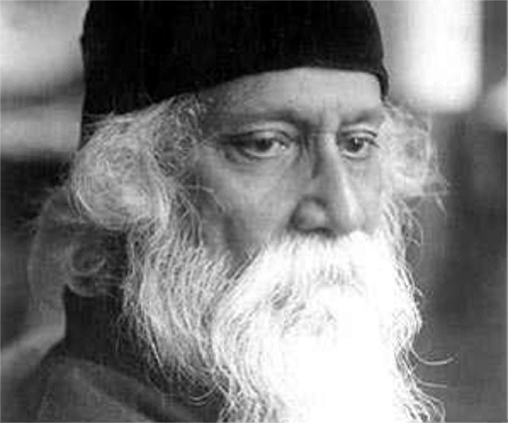
rabindra nath thakur (tagore)
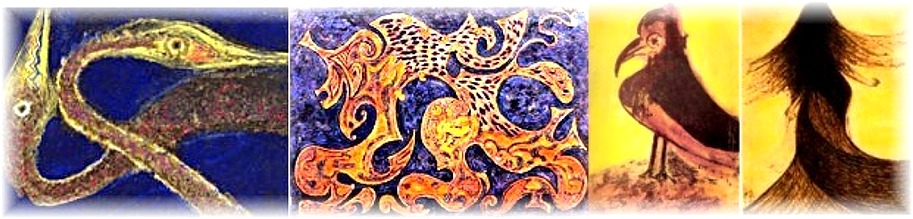
DIPINTI DI R. TAGORE - Fantasy Animal - Birds
- British Museum London
al museo di Rabindra Bharati chiamato anche Jorashanko Thakurbari -
calcutta -
si possono ammirare 40 dipinti - fotografie - scritti e
oggetti personali
Tagore’s family made also an art of draping sari
https://youtu.be/bBgFuQ_kNSc
- tagore's
painting
https://youtu.be/D6-v4nNC21g -
'Amare ke nibi bhai' ... Tagore
nobelprize.org/prizes/literature/1913/tagore
- tagore and his india
https://it.wikipedia.org/wiki/Jana_Gana_Mana
-
facebook.com/nobelprize/photos -
rtagore translation
https://youtu.be/ngYpM7UFeHE - 'Jana
Gana Mana' - RTagore's Voice
https://youtu.be/ayarfUOhqEA
- tagore canta
https://youtu.be/crGkdaPtBDg -
https://youtu.be/EMN8_7C3lzc
- the voice of
rtagore
.
.
Galleria Italiana all'interno della Casa Museo del
Nobel Rabindranath Tagore
firmato l'accordo - ... possibili influenze tra Tagore, Dante
e Gabriele D'Annunzio ... intendiamo proporre nuovi
percorsi in questa stimolante esplorazione di universi culturali
sorprendentemente legati tra loro ...
gianluca rubagotti - console generale - ansa 2023
.
.
Io non so chi dipinga sulla tela del ricordo !
Ma
chiunque sia l'ignoto artista, qualunque cosa vada riproducendo, ciò che egli fa
non è che una successione di quadri. Con questo non
intendo dire che egli col suo pennello non esegua copie fedeli di quanto gli
accade intorno: a seconda del suo gusto, alcune cose disegna, altre trascura,
molte cose grandi rende piccole e altre piccole ingrandisce; non ha nessuno
scrupolo di lasciare nell'ombra ciò che è in piena luce e di raccontare prima
ciò che invece viene dopo: egli dipinge quadri, non scrive una storia .
Passa dinanzi ai suoi occhi la serie infinita degli avvenimenti della vita, che
nella sua anima si trasformano in immagini, che somigliano, corrispondono, ma
non sono proprio la realtà ...
oltre
il ricordo - fb/raicultura
.
.
Asian Week a New York
2013
secondo posto a
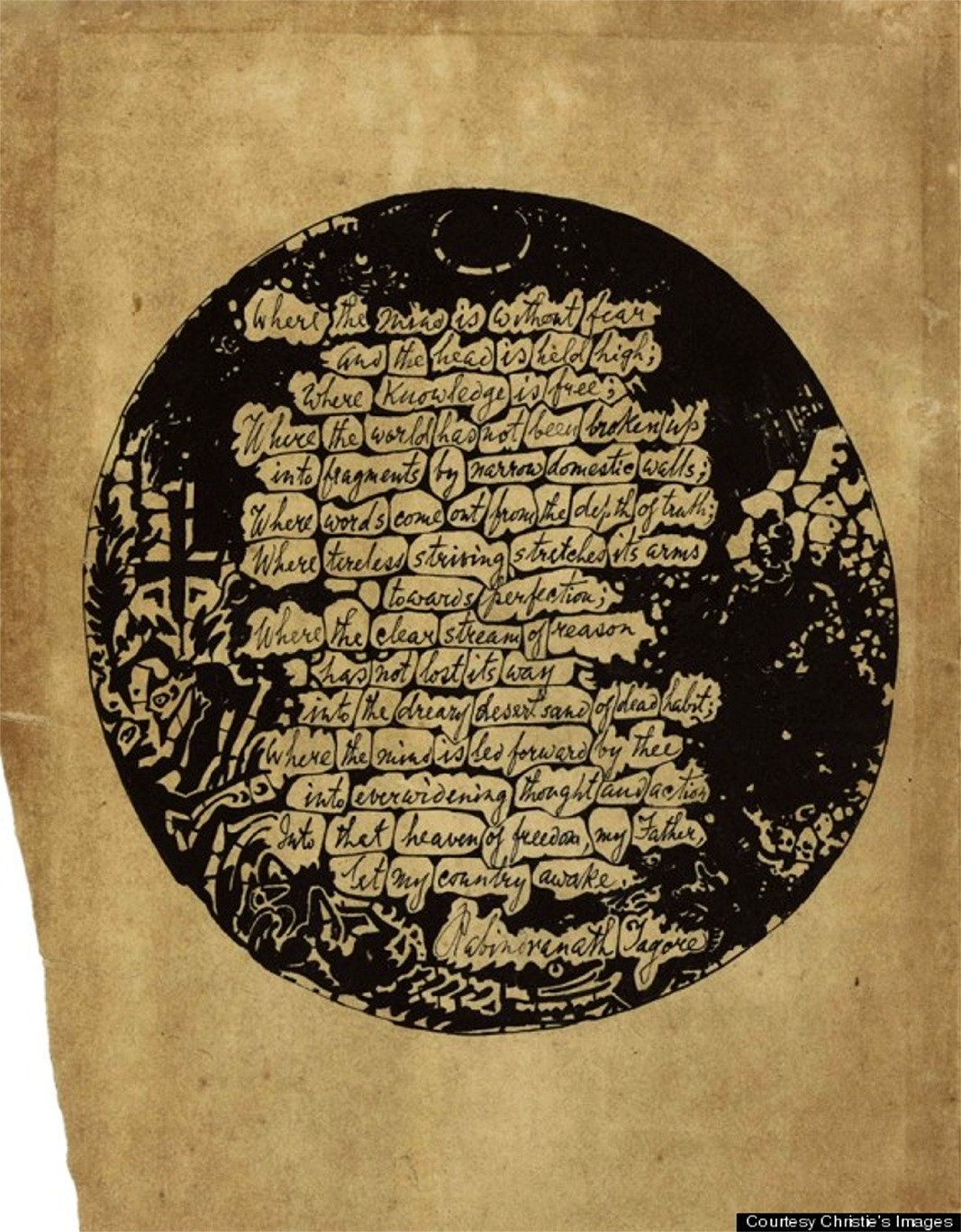
Where the mind is without fear realizzato da Tagore nel
1910. inchiostro su carta quotata 100-150mila$ è passata di mano per 363mila $.
Acquirente un'istituzione asiatica.
riccarda mandrini - arteconomy24.ilsole24ore.com - 2013
Il mio istinto
– ha scritto Tagore per il quale il
ritmo era il principio di tutte le arti - mi ha indotto a conoscere che linee e
colori nell’arte sono portatori di informazioni, ma cercano la loro incarnazione
ritmica nelle immagini. Il loro scopo ultimo non è quello di illustrare o di
copiare qualche fatto esterno o visione interiore, ma evolvere una totalità
armonica che si trasforma attraverso i nostri occhi in immaginazione.
RT
|
INGRANDISCI
.
dailymotion.com/video
- tagore au petit palais
- 2012
.
|
|
When I go hence, let this be my parting word
that what I have seen is unsurpassable
-rt
.
motivazione premio nobel :
...
because
of his profoundly sensitive,
fresh and beautiful verse, by which, with consummate skill, he has made
his poetic thought, expressed in his own English words, a part of the
literature of the West ...
nobel
1913
Per la profonda sensibilità, per la freschezza e bellezza dei versi che,
con consumata capacità, riesce a rendere nella sua poeticità, espressa
attraverso il suo linguaggio inglese, parte della letteratura dell'ovest
.
|
vita della mia vita
sempre cercherò di conservare
puro il mio corpo
sapendo che la tua carezza vivente
mi sfiora tutte le membra.
Sempre cercherò di allontanare
ogni falsità dai miei pensieri
sapendo che tu sei la verità
che nella mente
mi ha acceso la luce della ragione.
Sempre cercherò di scacciare
ogni malvagità dal mio cuore
e farvi fiorire l’amore,
sapendo che hai la tua dimora
nel più profondo del cuore.
E sempre cercherò nelle mie azioni
di rivelare te
sapendo che è il tuo potere
che mi dà la forza di agire.
gitanjali – Il giardiniere
|
|
Il dolore della separazione
si spande per tutto il mondo
e fa nascere innumerevoli forme
nel cielo infinito.
La tristezza della separazione
fissa in silenzio per tutta la note
di stella in stella, e diventa canto
tra le foglie fruscianti
nella piovosa oscurità di luglio.
Questa pena che tutto pervade
s’infonda in amori e desideri,
in sofferenze e gioie nelle case umane
ed è la stressa che sempre si fonde
e sgorga in canti nel mio cuore di poeta.
|
Indugio
O morte, io so: tu hai intrecciato
un nido dentro il mio petto
dove in una serra solitaria fioriscono
tutti i miei affetti, i miei amori
le speranze segrete del cuore, le gioie
ed i dolori della vita, le pene dell'animo
tutti i desideri e le visioni, le lacrime ed i sorrisi
i segni e le immagini di ogni giorno
dove all'ombra di un Eden, senza timore
gioca il tesoro interiore
i pupazzi degli affetti, i ricordi degli amori
della vita, i raggi della felicità
Quante luci, quante ombre, lingue melodiose
di molti piccoli uccelli !
O morte, ho saputo: venuta qui dentro
hai intrecciato il mio nido.
Giorno e notte giochi insieme
col mondo interiore: vita irrequieta !
Osservo sulla via maestra il camminare
|
Tagore prize
Starting 2009, the Tagore Literature Awards will be announced in the last
week of every December, after the winners of the general Akademi awards have
been declared, Rao said. “We don’t want to club them,” the official added.
The Tagore awards will recognise the best literary contributions in eight Indian
languages every year.
cithara paul - telegraphindia.com
|
|
IL NATALE secondo
tagore
Le sue parole sembrano state
scritte oggi, per noi, ma portano la data del Natale 1932. Il poeta e drammaturgo Tagore non è giunto a una fede cristiana esplicita ma parla del Natale
cristiano come noi oggi non avremmo il coraggio di fare.
Fare una cerimonia religiosa
particolare, in un giorno fissato per onorare i
grandi uomini, è uno sdebitarci a poco prezzo. Non ricordandoci di loro per 364
giorni e onorandoli solo il 365°, noi facciamo piacere solo alla nostra vanità.
La realizzazione della verità non sta nel riconoscere i nostri doveri: qui è
facile sbagliarsi. Se cerchiamo di eliminare la nostra responsabilità ripetendo
parole, rendiamo solo più difficile il cammino alla verità. Non vivendola nella
nostra vita, pensiamo di salvarci presentando facili offerte di lode. Abbiamo
ingabbiato dentro la ripetizione di rituali esteriori coloro che sono venuti a
liberarci della esteriorità. Mi sento pieno di vergogna al pensiero di essere
chiamato un giorno solo a compiere il rito celebrativo. È una mancanza di
serietà molto grande ripagare con parol e
Colui al quale dobbiamo legarci con la vita. Parlerò della sua nascita legandola
solo a una precisa data del calendario?
IL FIGLIO DEL PADRE È NATO
NELLA NOSTRA VITA
il giorno in cui abbiano compiuto una rinuncia in nome
della verità, il giorno in cui abbiamo chiamato fratello con amore vero un altro
uomo. Questo è il Natale, in qualsiasi momento avvenga! Il giorno della nascita
di Gesù può arrivare nella nostra vita in qualsiasi momento, così come il giorno
della sua crocifissione arriva un giorno dopo l’altro. In questo giorno
particolare, in tutti i paesi, in tutte le chiese si elevano inni di lode a
Colui che ha parlato a tutti gli uomini del Padre supremo. E fuori da quelle
stesse chiese la terra è bagnata dal sangue per l’uccisione dei fratelli. Coloro
che oggi gli elevano inni di lode nel tempio, lo rinnegano col tuono del
cannone, lo deridono nella sua parola facendo piovere dal cielo la morte. C’è
un’avidità crudele: è tolto con violenza il cibo ai poveri. Coloro che non hanno
il coraggio di affrontare le percosse opponendosi alla violenza nel nome di
Cristo, ritti davanti all’altare, inneggiano con parole formali alla vittoria
del Misericordioso trafitto dalla lancia. Allora, perché questo è un giorno di
festa? Come posso sapere che Cristo è nato in terra? Di che cosa posso gioire?
Come posso proclamare solo a parole la nuova nascita di quello stesso Gesù che
da un’altra parte percuoto con le mie stesse mani? Anche oggi nella storia umana
Egli è crocifisso ogni momento.
EGLI HA CHIAMATO L’UOMO
FIGLIO DEL PADRE SUPREMO.
Ha detto al fratello di unirsi al fratello; ha fatto
umile offerta della verità umana sull’altare. Ci ha esortato con parole
eterne all’unità. Ma di secolo in secolo noi abbiamo rigettato il suo invito.
Abbiamo fatto di tutto per opporci alla sua parola. Nelle formule dei Veda è
scritto che Dio è Padre; per questo c’è la preghiera: «Si risvegli in noi
la coscienza che Egli è Padre!». Colui che è venuto a darci la consapevolezza
di questa paternità, frustrato e deriso è arrivato alla nostra porta. Non
releghiamo la sua parola solo nel canto e nelle lodi. Oggi è giorno per
pentirsi, non per godere. Oggi la vergogna per quello che l’uomo compie
pervade tutto il mondo. Abbassiamo nella polvere il nostro capo altezzoso
e dagli occhi scendano lacrime. Il Natale è un giorno di riflessione, un giorno
per farci tutti umili.
Santiniketon, 25 dicembre
1932
astori.it - jesuschrist.it - cbci.org
Rabindranath Tagore
In Conversation with Albert Einstein
Tagore and Einstein met through a common
friend, Dr. Mendel. Tagore visited Einstein at his residence at Kaputh in the
suburbs of Berlin on July 14, 1930, and Einstein returned the call and visited
Tagore at the Mendel home. Both conversations were recorded. The July 14
conversation is reproduced here, and was originally published in The Religion
of Man (George, Allen & Unwin, Ltd., London), Appendix II, pp. 222-225.
TAGORE: I was discussing with Dr. Mendel
today the new mathematical discoveries which tell us that in the realm of
infinitesimal atoms chance
has its play; the drama of existence is not
absolutely predestined in character.
EINSTEIN: The facts that make science tend toward this view do not say
good-bye to causality.
TAGORE: Maybe not, yet it appears that the idea of causality is not in
the elements, but that some other
force builds up with them an organized
universe.
EINSTEIN: One tries to understand in the higher plane how the order is.
The order is there, where the big elements combine and guide existence, but in
the minute elements this order is not perceptible.
TAGORE: Thus duality is in the depths of existence, the contradiction of
free impulse and the directive will which works upon it and evolves an orderly
scheme of things.
EINSTEIN: Modern physics would not say they are contradictory. Clouds
look as one from a distance, but if you see them nearby, they show themselves as
disorderly drops of water.
TAGORE: I find a parallel in human psychology. Our passions and desires
are unruly, but our character subdues these elements into a harmonious whole.
Does something similar to this happen in the physical world? Are the elements
rebellious, dynamic with individual impulse? And is there a principle in the
physical world which dominates them and puts them into an orderly organization?
EINSTEIN: Even the elements are not without statistical order; elements
of radium will always maintain their specific order, now and ever onward, just
as they have done all along. There is, then, a statistical order
in the elements.
TAGORE: Otherwise, the drama of existence would be too desultory. It is
the constant harmony of chance
and determination which makes it eternally new
and living.
EINSTEIN: I believe that whatever we do or live for has its causality; it
is good, however, that we cannot see through to it.
TAGORE: There is in human affairs an element of elasticity also, some
freedom within a small range which
is for the expression of our personality. It
is like the musical system in India, which is not so rigidly fixed as western
music. Our composers give a certain definite outline, a system of melody and
rhythmic arrangement, and within a certain limit the player can improvise upon
it. He must be one with the law of that particular melody, and then he can give
spontaneous expression to his musical feeling within the prescribed regulation.
We praise the composer for his genius in creating a foundation along with a
superstructure of melodies, but we expect from the player his own skill in the
creation of variations of melodic flourish and ornamentation.
In creation we
follow the central law of existence, but if we do not cut ourselves adrift from
it, we can have sufficient freedom within the limits of our personality for the
fullest self-expression.
EINSTEIN: That is possible only when there is a strong artistic tradition
in music to guide the people's mind. In Europe, music has come too far away from
popular art and popular feeling and has become something
like a secret art with
conventions and traditions of its own.
TAGORE: You have to be absolutely obedient to this too complicated music.
In India, the measure of a singer's freedom is in his own creative personality.
He can sing the composer's song as his own, if he has
the power creatively to
assert himself in his interpretation of the general law of the melody which he
is given to interpret.
EINSTEIN: It requires a very high standard of art to realize fully the
great idea in the original music, so that one can make variations upon it. In
our country, the variations are often prescribed.
TAGORE: If in our conduct we can follow the law of goodness, we can have
real liberty of self-expression. The principle of conduct is there, but the
character which makes it true and individual is our own creation. In our music
there is a duality of freedom and prescribed order.
EINSTEIN: Are the words of a song also free? I mean to say, is the singer
at liberty to add his own words to the song which he is singing?
TAGORE: Yes. In Bengal we have a kind of song-kirtan, we call
it-which gives freedom to the singer to introduce parenthetical comments,
phrases not in the original song. This occasions great enthusiasm, since the
audience is constantly thrilled by some beautiful, spontaneous sentiment added
by the singer.
EINSTEIN: Is the metrical form quite severe?
TAGORE: Yes, quite. You cannot exceed the limits of versification; the
singer in all his variations must keep the rhythm and the time, which is fixed.
In European music you have a comparative liberty with time, but not with melody.
EINSTEIN: Can the Indian music be sung without words? Can one understand
a song without words?
TAGORE: Yes, we have songs with unmeaning words, sounds which just help
to act as carriers of the notes. In North India, music is an independent art,
not the interpretation of words and thoughts, as in Bengal. The music is very
intricate and subtle and is a complete world of melody by itself.
EINSTEIN: Is it not polyphonic?
TAGORE: Instruments are used, not for harmony, but for keeping time and
adding to the volume and depth. Has melody suffered in your music by the
imposition of harmony?
EINSTEIN: Sometimes it does suffer very much. Sometimes the harmony
swallows up the melody altogether.
TAGORE: Melody and harmony are like lines and colors in pictures. A
simple linear picture may be completely beautiful; the introduction of color may
make it vague and insignificant. Yet color may, by combination with lines,
create great pictures, so long as it does not smother and destroy their value.
EINSTEIN: It is a beautiful comparison; line is also much older than
color. It seems that your melody is
much richer in structure than ours. Japanese
music also seems to be so.
TAGORE: It is difficult to analyze the effect of eastern and western
music on our minds. I am deeply moved
by the western music; I feel that it is
great, that it is vast in its structure and grand in its composition. Our own
music touches me more deeply by its fundamental lyrical appeal. European music
is epic in character;
it has a broad background and is Gothic in its structure.
EINSTEIN: This is a question we Europeans cannot properly answer, we are
so used to our own music. We want to know whether our own music is a
conventional or a fundamental human feeling, whether to feel consonance and
dissonance is natural, or a convention which we accept.
TAGORE: Somehow the piano confounds me. The violin pleases me much more.
EINSTEIN: It would be interesting to study the effects of European music
on an Indian who had never heard
it when he was young.
TAGORE: Once I asked an English musician to analyze for me some classical
music, and explain to me what elements make for the beauty of the piece.
EINSTEIN: The difficulty is that the really good music, whether of the
East or of the West, cannot be analyzed.
TAGORE: Yes, and what deeply affects the hearer is beyond himself.
EINSTEIN: The same uncertainty will always be there about everything
fundamental in our experience, in our reaction to art, whether in Europe or in
Asia. Even the red flower I see before me on your table may not be
the same to
you and me.
TAGORE: And yet there is always going on the process of reconciliation
between them, the individual taste conforming to the universal standard.
mukto-mona.com - cs.brockport.edu
I have no special talent.
I am only passionately curious
albert einstein
in questo mondo è più difficile vincere il
pregiudizio che dividere l'atomo
albert einstein
IMPORTANTE MANOSCRITTO DI EINSTEIN NEGLI ARCHIVI DELL'UNIVERSITA' DI LEYDE -
OLANDA
un saggio di 16 pagine in tutto. risale al 1924 e descrive la trasformazione
degli atomi di un gas a temperature molto basse. Tale processo è attualmente
conosciuto come condensazione Bose-Einstein. Negli anni Venti Einstein giro' in
lungo e in largo l'Europa per tenere conferenze e letture sulle sue teorie.
adnkronos
EINSTEINJAHR 2005
|
Tagore in the United States : A
Brief Discussion
Recently I have heard certain
questions being raised pertaining to Rabindranath Tagore's relationship
with the United States. Some have expressed interest in this matter as
well. Hence,this rather brief discussion.
Tagore had sent his eldest son Rathindranath and
Santosh Chandra, the son of a friend to study agriculture and animal
husbandry in the United States when the boys were respectively seventeen
and eighteen years old. His intention was to have them acquire scientific
knowledge to help solve the problem of persistent food shortage in India.
In those days (1905) it was far more common for the sons of affluent
families to travel abroad (typically England) to study law or prepare for
civil service by completing the ICS (Indian Civil Service) examinations
(translator's note: in this, as in many other matters, these aspects of
Tagore's thoughts and visions were clearly precursors of attempts at
national reconstruction and development which became a hallmark of Mahatma
Gandhi 's activities later. Tagore's and Gandhi's views and methodologies,
however, were not often convergent). Sometime later, Rabindranath sent his
youngest son-in-law Nagendranath Gangopadhyay to the United States for the
same purpose. It was extremely rare in those days to choose the United
States for higher studies over England, Germany, France or Japan.
Rathindranath has recounted in his Pitrismriti and On the Edges of Time
that no one from the University of Illinois was present to receive him at
the railway station because they had presumed that two students were due
to arrive from Indiana (instead of India)!
Tagore traveled to the United States for the first
time near the end of 1912, accompanied by Rathindranath and his
daughter-in-law Pratima Devi. Even though he was then over fifty, his name
was hardly known in the West. From New York, they traveled to Urbana, the
small town where Rathindranath had studied at the university. This time
Rathindranath began graduate studies in biology (translator's note: his
intentions to pursue a doctoral degree, however, were never fulfilled- see
The Myriad-Minded Man (MMM) by Krishna Datta and Andrew Robinson).
Rabindranath, meanwhile, read from translations of some of his essays in
Bengali at the local Unitarian Church. These were his first lectures
outside India. Perhaps because his own Brahmo faith had Unitarian
influences, his audiences seemed to have liked these writings. Near the
beginning of 1913, he read a few more essays in Chicago, and then
proceeded to Rochester, New York, to attend a conference on religions.
Here he presented a lecture under the title Race Conflict. Thereafter, he
went to Harvard to present a few more talks. After traveling to a few more
cities he returned to Urbana. After six months there, the poet grew tired
mentally. It had been planned originally that they would stay there a
while, and Rathindranath would finish his research in the meantime. It was
not to be. The chief outcome of this trip was a major change in Tagore's
conceptions for the Brahmacharya Ashram at Santiniketan. He felt deeply
the need to establish a technical division and a hospital there, and
educate the students in science. In his new conception, Jagadananda Roy (a
science teacher and writer of popular science- translator) and
Rathindranath would carry out experimental research in laboratories. The
idea of establishing a university at Santiniketan also germinated in his
mind at this time.
Realizing that receiving (British) government money for his work at
Santiniketan might interfere with his freedom (translator's note: in a
related letter, he asserted "no one is going to put chains on my feet"-
see MMM), Rabindranath worked tirelessly for the rest of his life to raise
much-needed funds for carrying out his novel experiments in education from
within and outside India. His efforts to use his students in the
production of plays and dance-dramas even in old age were also motivated
by the same desire. Unfortunately, he continued to face acute financial
woes again and again.
In
1916, Major J.B.Pond of the J.B.Pond Lyceum proposed to Tagore that he
would receive a compensation of $12,000 if he agreed to present lectures
at several U.S. cities in accordance with an itinerary drawn up by his
organization. On account of his Nobel Prize, and the fact that many of his
writings had by then been translated into several European languages,
Rabindranath was at this time an internationally renowned figure.
Accompanying Tagore on his trip this time were C.F.Andrews, William
Pearson and Mukul De, a young painter. Beginning with Seattle,
Rabindranath traveled across the United States, lecturing in city after
city, sometimes repeating the same talks, until he arrived in New York. In
a letter written during that tour, he wrote (to paraphrase a delightfully
rhyming bon mot), "I travel, I roar, I earn, I dissipate". At length, the
arrangement became sufficiently unbearable, and Rabindranath was forced to
cancel his contract despite a high financial loss. The lectures he
presented on the tour may be found in his books Nationalism and
Personality. At the time of the tour, Europe was engaged in World War I.
He repeatedly warned that the spirit of extreme and virulent nationalism
would drag the world towards destruction, and advocated vigilance and
restraint. Judging by the events that followed twenty or twenty-five years
later, it is eminently clear that Tagore's prophesies were right on the
mark. The seed of World War II may be found dormant within the events of
this period. Sometime later, Bertrand Russell spoke sternly against narrow
nationalism and the institution of war and was imprisoned. Many in Europe
and America were greatly piqued by Tagore's pacifist and anti-nationalist
message. This might well be the primary reason behind the erosion of his
popularity in the West.
Upon arriving in New York on a tour of the United States in 1920 Tagore
observed that the enthusiasm and ebullience with which he had been
received during his preceding visit were palpably lacking this time
around. He gave a few lectures in New York and at Harvard, no doubt, but
there was a clear absence of sincerity and warmth all around him. This
time his efforts at fund-raising for Visva-Bharati met with even more
dismal results. Not many seemed to be eager to pay much heed to the
message of India's "mystic" poet, nor had any interest to know about
Visva-Bharati. Feeling imprisoned within the walls of the sky-hugging
luxury hotel, he became quite weary and restless. He attempted to arrange
a meeting with Mrs. Carnegie; she declined. The Rockefellers, likewise,
spurned his overtures (translator's note: in this context, it is tempting
to cite an incident that occurred during Tagore's stay at Yama Farms, a
retreat for American millionaires and their guests- intellectuals of world
stature. It turns out that late one day, while two emigre Russian artists
were busy sketching him, Tagore pulled out a handkerchief from inside his
robe, and a dime fell out. Tagore apparently said to his visitors, "Isn't
it odd, an old gentleman gave me this as he was waiting for his car. Do I
look like a tramp?" The infamous dime, it seems, was given to him as alms
earlier that day by a stranger! Upon further inquiry, it was determined
that the benevolent donor was none other than John D. Rockefeller, who had
mentioned giving the dime to "an old Negro!". Readers may draw their own
conclusions about America's super-rich from this incident. To find out
more, see MMM). About a month later, he received an invitation from the
Junior League; however, here, too, he was unsuccessful in raising any
money. One professor wanted to know the British government's attitude
towards Santiniketan. It gradually became clear to Rabindranath that his
relinquishment of the Knighthood in 1919 in protest of the Amritsar
massacre had not pleased Americans either. On a more positive note, the
American Poetry Society gave him a warm reception.
Later, in Chicago, Tagore stayed
for a few days at the home of Mrs. Moody, wife of a professor at the
University of Illinois. The English version of his Chitra was dedicated to
her. Meanwhile, Major Pond of the Lyceum had arranged for fifteen lectures
in Texas. During this lecture tour Rabindranath met Leonard Elmhirst for
the first time. This young Englishman (translator's note: Elmhirst had a
degree in agriculture from Cornell University) later helped Rabindranath
considerably in his rural development project at Sriniketan, a hamlet near
Santiniketan. He accompanied Tagore on his journey to South America in
1924, and when Tagore fell ill on board the ship, took care of him for two
months in Argentina. Elmhirst's American friend, Dorothy Straight, who
later became his wife, provided funds for the work at Sriniketan
(translator's note: she apparently did so more out of her fondness for
Elmhirst than for her interest in Tagore or his educational projects- see
MMM). Overall, Tagore received little by way of funds or recognition from
this tour of the United States. Compared with England, the lack of
idealism he witnessed there became recurrent in his memory for years
afterwards.
In 1929,
Canada's Council of Education invited Tagore to discuss his ideas on
Education and Leisure. This was his first formal recognition as an
educator from outside India. In Vancouver, he met Canada's Governor
General, Lord Willingdon, who later became Viceroy of India.
During the tour of 1929,
Rabindranath received invitations from several U.S. cities, and eventually
arrived at Los Angeles. It was the encounter with immigration officials at
this port of entry that offended Tagore greatly (translator's note: he was
detained for half an hour, asked questions such as if he had any criminal
record, and finger-printed, among other acts of humiliation). Abruptly
cutting his visit short, he decided to go to Japan instead. "I am sorry I
must take back this memory of American bad manners he said later.
Incidentally, it may be mentioned that he was detained for several hours
by U.S. customs in 1912.
Following his tour of the Soviet Union, Tagore returned to the U.S. for
what would be his last visit in late 1930. He waited in vain for a month
and a half to meet with the Rockefellers. One business organization
welcomed him at a lavish dinner reception (with 500 invited guests).
Commenting on the reception, the Saturday Review observed that even though
there were several well-known business and wealthy personages listed among
the invitees, there was not one recognizable writer or poet among them.
The Review wondered if such a thing could have happened in France, for
instance. Rabindranath had a meeting with President Herbert Hoover,
arranged by the Ambassador of Great Britain. There were several
exhibitions of his paintings; however, no lectures were organized. Most
Americans were presumably wary of the possibility that Tagore might
compliment the Soviet socialist experiments. Once again, his hopes of
raising funds for education in the U.S. were dashed.
In conclusion, it may be said that
during the first third of this (the twentieth) century, the United States
lagged considerably behind Europe both culturally and intellectually. Few
Americans had any interest about the civilization or heritage of Oriental
cultures (translator's note: with a few exceptions, such as the historian
and scholar Will Durant). Sadly, such interest is generally lacking even
today. It is true that the writings of Ralph W. Emerson (translator's
note: and also Henry D. Thoreau), the famed Boston brahmin who had great
regard for Indian culture, inspired many educated Bengalis at the time.
However, while Tagore met first-rate intellectuals and thinkers in many
countries of the world who pointed him in new directions, and illuminated
him further in his efforts at uniting the East and the West, such
individuals were sorely lacking in the United States. The Hindu Poet's
speeches on race relations and his exhortations about the consequences of
narrow nationalism did not make much impact in American minds. We have
seen already that his efforts at fund-raising for Santiniketan were
largely futile. For these reasons, we find virtually no mention of the
United States anywhere in Tagore's writings. Likewise, Tagore, too, is
largely forgotten today in the United States .
some material has
been taken from Prabhat Kumar Mukhopadhyay's Rabindra Jivan Katha
- cs.brockport.edu
by Dr. Rajat Chanda, Bell Laboratories,
New Jersey, USA
translated with kind permission from
the Bengali by Monish R. Chatterjee
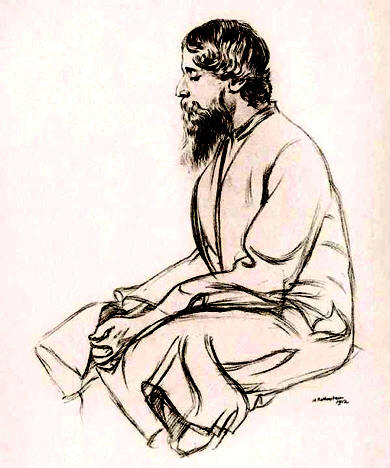
disegno di william
rothenstein - 1912
fb/rabindranath - 2015
|
|
You must be the change
you wish to see in the world
|
www.mkgandhi.org |
|
TAGORE'S THOUGHTS
AND OPINIONS PROVOKED GANDHI AND NEHRU TO OPEN
THEIR MINDS TO A LARGER WORLDVIEW. WHILE GANDHI WAS THE LEADER OF
NATIONALISM AND NEHRU, THE NURTURER, TAGORE WAS THE UNACKNOWLEDGED
FORCE BEHIND THEM.
timesofindia.indiatimes.com
I HOPE I AM AS GREAT A BELIEVER IN
FREE AIR AS THE POET
GANDHI
.
EINSTEIN ON GANDHI
I BELIEVE THAT
GANDHI'S VIEWS WERE
THE MOST ENLIGHTENED OF ALL THE POLITICAL MEN
IN OUR TIME
WE
SHOULD STRIVE TO DO THINGS IN HIS SPIRIT
NOT TO USE VIOLENCE IN
FIGHTING FOR OUR CAUSE
BUT BY NON-PARTICIPATION IN ANYTHING YOU
BELIEVE IS EVIL
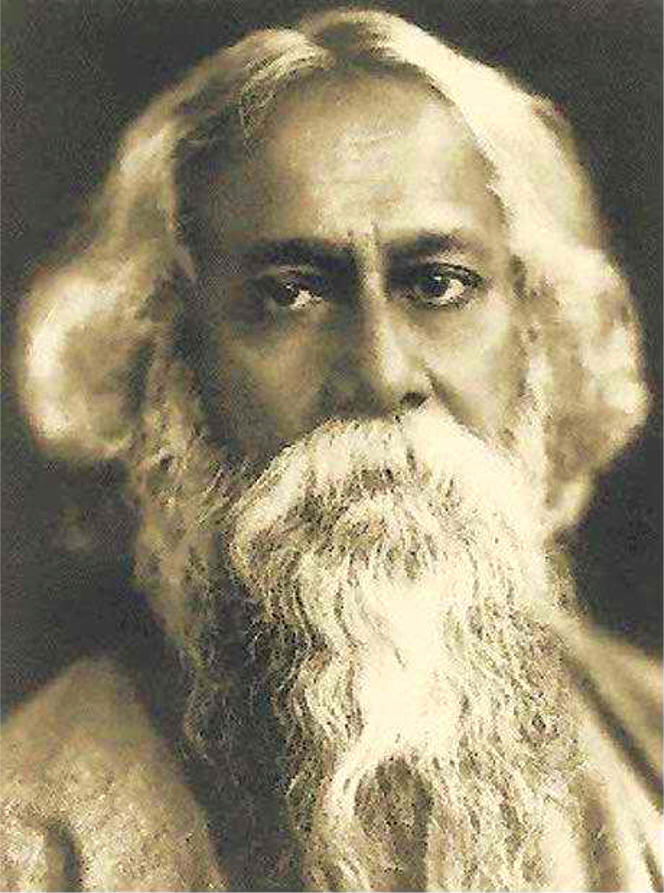
La lezione più importante che l'uomo possa
imparare in vita sua
non è che nel mondo esiste il dolore
ma che dipende da noi trarne profitto
che ci è consentito trasformarlo in gioia
1
-
1a -
2 -
welcome tagore
altri autori
 home home
| |