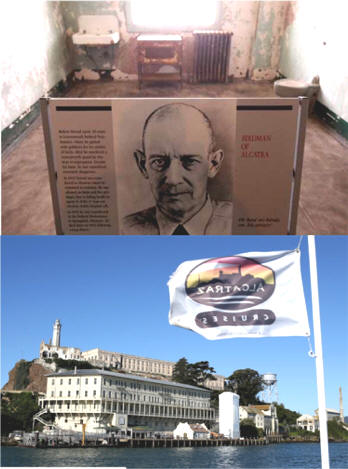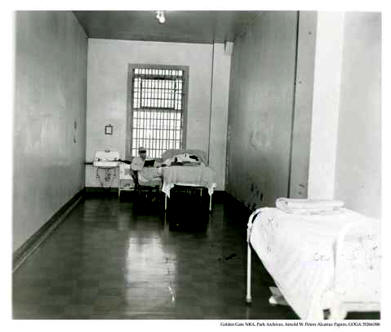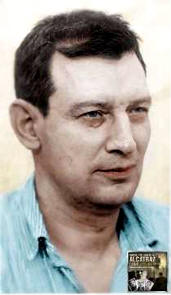
fb/alcatrazhistory
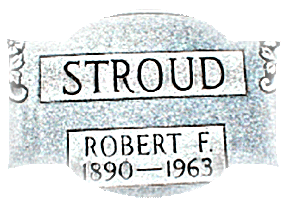
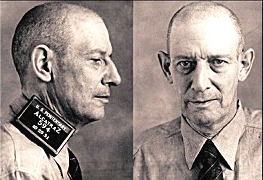
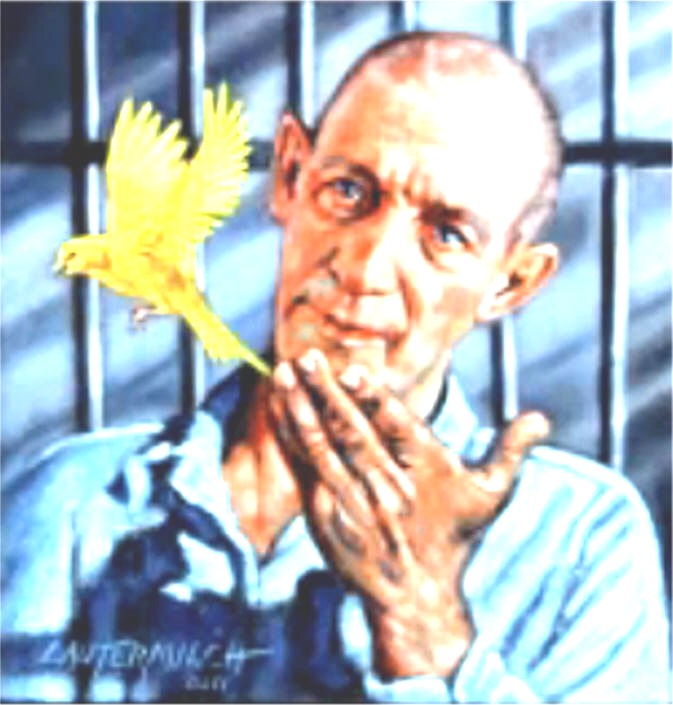
robert franklin stroud
fb/alcatrazhistory
Seattle 28 gennaio 1890 – Springfield 21 novembre 1963
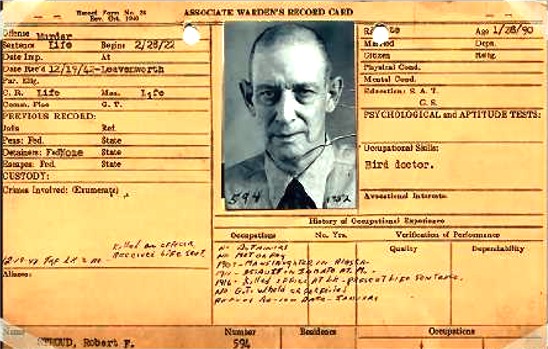
Psychiatric Summary for Robert Stroud
|
|
|
Psychiatric Summary of STROUD, ROBERT, 594-AZ. |
|
|
Age 53. Male. White. Single. Received at McNeil Island in 1909, to serve 12 years for Manslaughter in Alaska. Transferred to Leavenworth in 1912. In 1916 was sentenced to DEATH for MURDER of a Custodial Officer. This was later commuted to LIFE. Transferred to Alcatraz December 19, 1942. |
|
Prenatal |
Father died at 74. Mother died at 78, Ca Womb. |
|
Natal |
Born in Seattle, Jan 28, 1890. Normal birth. |
|
Preschool |
He was the third of four children. Raised by parents who seperated when subject was 12. He stayed with mother. |
|
School |
He attended school until 12, reached 3rd grade. |
|
Occupational |
He left home at 13 and traveled about rather aimlessly until age of 17 when he went to Alaska where he worked irregularly for about a year when he killed a man who had stayed all night with a woman for whom Stroud was pimping, and the paid he on $2.00 of a usual $10.00 fee. Stroud admits killing a man there but says it was a justifiable homicide etc. He received a 12 year sentence at Mc Neil Island and while there assaulted another Inmate for which he received a sentence of 6 months to run consecutively. Then he was transferred to Leavenworth where he killed an Officer whom he claims was threatening him with a club etc. Since that time he has been kept in segregation where he was allowed to raise birds for sale and operate a laboratory for the study of bird diseases etc. He claims ignorance of the reasons for his transfer here. |
|
Physical |
He is well nourished and looks well. Ht 6'3"[?] Wt 183#. There is a history of an Appendectomy and Renal calcules. He has Pneumonia two yars ago. Complains of constipation and "sluggish kidneys". He has Defective Vision and defective hearing. Has reading glasses. He denies use fo drugs and has no needle scars. Heart action normal. Lungs clear. Wasserman negative. |
|
Mental |
He is properly oriented and in good contact. He is alert and shows no memory defect of disturbance of consciousness. His intellectual development is above the avrage inspite of limited formal schooling. Has learned much about bird diseases and the propogation of birds. Has written a book on this subject. He blames Mr. Hunter and Mr. Shuttleworth for his transfer here which he suspects was done to prevent publication of his book etc. Denies he holds any resentment however. Expresses no delusions and there is no evidence that he has hallucinated. He is quite proud of his attainments and the "good" he has done by his laboratory investigations. He is rather introspective and gives much thought to his own body functions. He is not psychotic. |
|
Diagnosis |
Psychopathic personality of Superior Intelligence. IQ 112 |
www.alcatrazhistory.com/stroud.htm
http://en.wikipedia.org/wiki/Robert_Stroud
https://it.findagrave.com/memorial/996/robert-franklin-stroud
|
pet - therapy
... ben
nota e singolare vicenda del pluriomicida Robert Stroud, ergastolano rinchiuso
dal 1942 nel penitenziario di Alcatraz (California), in regime di isolamento,
senza alcuna possibilità di contatto con gli altri reclusi, a causa della sua
indole violenta e sanguinaria. Un giorno lo Stroud, durante l’ora d’aria nel
cortile che gli era stato riservato, rinvenne sul selciato un passerotto
agonizzante. Raccolto, se ne prese cura, riuscendo a salvarlo. In seguito chiese
ed ottenne di poter allevare in cella alcuni canarini e, da quel momento, Stroud
subì una vera e propria metamorfosi. Quell’uomo rude ed attaccabrighe, autentica
belva umana, si trasformò – quasi d’incanto – in un tenero ed appassionato
cultore della biologia degli uccelli, sino a divenire in pochi anni, un
“birdman” di fama internazionale. Particolarmente
versato nello studio della patologia
degli uccelli da gabbia e del canarino in particolare, Stroud diede alle
stampe due trattati concernenti questa materia: “Stroud’s digest of bird
diseases” e “Diseases of Canaries”. Tali pubblicazioni, in considerazione
dell’origine autodidatta del loro estensore, hanno del prodigioso, per la
ricchezza di nozioni scientifiche
contenute e la ferrea logica
sperimentale con cui l’autore va alla ricerca di nuovi rimedi per le più
ricorrenti affezioni morbose dei volatili da gabbia; in un’epoca in cui la
stessa scienza veterinaria ufficiale, poteva ben poco nella cura dei volatili
ornamentali.
Robert Stroud morì il 21 novembre 1963
nel penitenziario di Alcatraz all’età di 73 anni, dopo che i suoi trattati di
ornitopatologia avevano fatto il giro del mondo, divenendo a quei tempi dei
preziosi classici della materia. La strabiliante storia di Robert Stroud venne
immortalata su celluloide dal regista John Frankeimer nel film: “L’uomo di
Alcatraz” ...
utenti.multimania.it
Un giorno il detenu
Alcatraz dopo trent'anni anni dalla sua
chiusura e diventato
un paradiso per i volatili - un santuario per i pennuti che resero
celebre la prigione e il suo piu' illustre inquilino. Robert Stroud,
l' ergastolano che da un semplice amore per i canarini fu contagiato
al punto da diventare una delle massime autorita' ornitologiche
mondiali .
Initially, Stroud had a close relationship with his mother. She helped him with
legal proceedings on many occasions, even managing to elicit sympathy from the
president over her son's death sentence. Stroud kept busy with his bird
enterprise and had numerous bird-loving pen-pals. He started a regular
correspondence with a woman named Della Mae Jones, a bird researcher, resulting
in her move to Kansas in 1931 and starting a business with Stroud, selling his
medicines. Stroud's mother strongly disapproved of the relationship and moved
away from the Leavenworth area. She also argued against her son's application
for parole, which became a major obstacle in his attempts to be released from
the prison system.
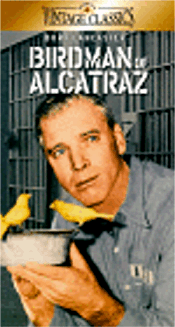
1962 Birdman of Alcatraz is based on the story of Robert Stroud, a lifer who turned to the study of birds to pass the time while in prison. Though based on a true story, the movie takes a number of liberties with the facts, and as is often the case, the fictional aspect detract rather than add to the presentation. prisonflicks.com
birdman of alcatrazFar south of the southernmost suburbs is the town of Metropolis whose Masonic Cemetery (R.R. #2) received the remains of Robert Stroud (1890-1963), the legendary "Birdman of Alcatraz." A pimp convicted for murder in Juneau, Alaska, Stroud was to spend 12 years imprisoned on McNeil Island for his crime, but was transferred to Leavenworth after attacking an orderly. There, just five years later, he stabbed a guard to death and was sentenced to be hanged. While he waited on death row, Stroud petitioned Mrs. Woodrow Wilson, begging for a lesser punishment. A week before his execution date, he was re-sentenced to life in prison. With no chance of parole, Stroud had nothing but time, and he put it to good use. At Leavenworth, the convict had rescued a sickly bird, keeping it as a pet in his cell. Though this practice was not uncommon, Stroud's interest in his feathered friend grew into an obsession, and he eventually took in some 300 birds, caring for them in several cells that were allotted him by the prison administration. Far from an eccentric interest, Stroud's work with his birds was serious business. After engaging in formal research, the Birdman wrote two books: Stroud's Digest on the Diseases of Birds and Diseases of Canaries. In 1942, Stroud was transferred to isolation in the notorious "D" block on Alcatraz, where his birds were barred. In these new surroundings, Stroud became sullen and angry, inspiring fellow inmates to frequent violence. After ten years, the Birdman decided on a new project; he began to write the story of his life. Remarkably, Stroud's manuscript was published only a year after its completion, and Hollywood went wild for the story. Stroud never saw his story played out on the silver screen. Like the chirping chums of his younger days, The Birdman of Alcatraz, with Burt Lancaster playing the title role, was banned from the infamous island, its subject left to a few more years of lonely reflection. He died in a prison hospital in 1963. adena.com
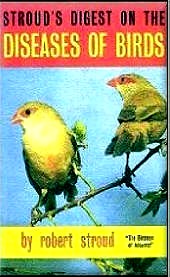
Originally published in 1933. The
author was well known as "The Bird Man of Alcatraz." He wrote this book while
serving a life sentence. A comprehensive work containing much information on: -
Anatomy - Feeding - Feeding Experiments - Insects and Parasites - The Moult -
Injuries - Septic Fever - Septicemia - Necrosis - Diarrhoea - Aspergillosis -
Bacteriology - Pathogenic Organisms - Drugs etc. Keywords: Pathogenic Organisms
Life Sentence Bird Man Aspergillosis Septicemia Bacteriology Diarrhoea Alcatraz
Necrosis Parasites Insects Anatomy Fever Drugs
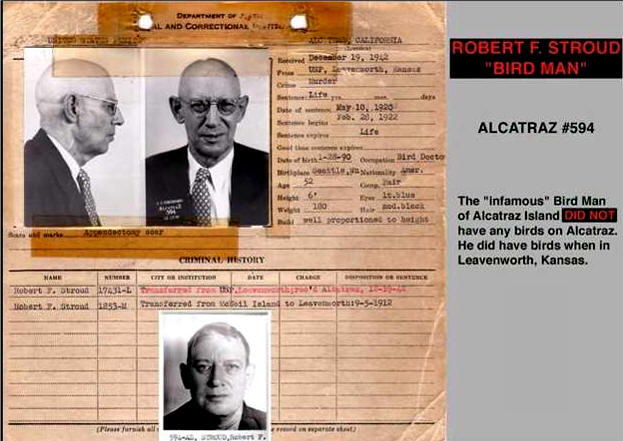
January 28, 1890 - Robert 'The Birdman' Stroud (594-AZ) is
born Seattle, Washington. He killed a man in Alaska and later murdered a guard
at Leavenworth where he also did all of his bird observations. He had no birds
on Alcatraz where he was isolated for six years in D-Block segregation, and
another 11 in the hospital. He died in Springfield prison in 1963. www.alcatrazhistory.com/stroud.htm
www.coopertoons.com/merryhistory/robertstroud/birdman.html
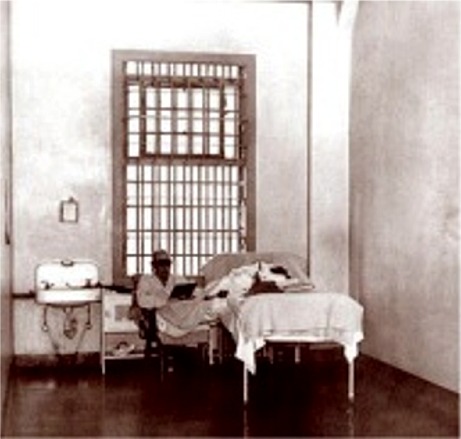
Who's who on Alcatraz The most complete media coverage to be accorded an Alcatraz inmate was given to Robert Franklin Stroud. He was to gain world wide attention and notoriety as the Birdman of Alcatraz, regardless of the fact he was not permitted to continue his avian studies during his 17 years on the island. Following incarceration in USP McNeil Island, where he was sentenced to 12 years for manslaughter in 1909, Stroud was transferred to Leavenworth after serving only three years. A history of violence dictated the move, and Stroud had been in Leavenworth less than four years when he attacked and killed a custodial officer in front of better than 2,000 other inmates. His trial resulted in the death sentence, but was commuted to life after his mother requested the intervention of President Wilson. Stroud's hostile and sometimes violent nature left prison administrators no choice but to keep him away from other inmates and officers, and prison officials interpreted this to mean he should spend the remainder of his life in segregation of some sort. The keeping of birds and the studying of avian diseases gained international attention for Stroud, but it was also to figure prominently in his ultimate transfer to Alcatraz. He began to openly violate prison rules and regulations in favor of continuing his experiments and communications with bird breeders and fanciers around the world. Stroud was literally packed up and moved out in the middle of the night, with his destination being San Francisco. Arriving on Alcatraz in 1942, he was to enjoy the company of fellow inmates within the confines of D Block until there occurred a change in administration with the retirement of Warden James Johnston and the arrival of Warden Ed Swope. The enigmatic Swope was not to be challenged in any way by Robert Stroud and immediately moved him into a private room in the prison's hospital. ...
nps.gov/museum/exhibits
alcatraz per i nativi americani significava pellicano che viveva in colonie su quest'isola
rotten.com alcatrazalumniassoc.org
Robert Stroud will always be remembered because he made great achievements in ornithology. He made a contribution to society because he never gave up. He
learned to live and love in the most deplorable of circumstances and can teach
us all a lesson in hope.
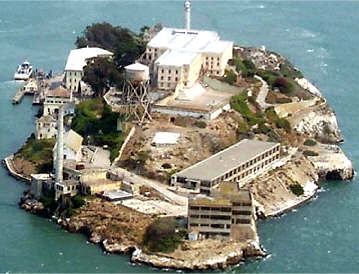
CHIUSURA DI ALCATRAZ THE ROCK - 1963 Ha ispirato registi e scrittori e ospitato i criminali più pericolosi d'America. Alcatraz, il carcere simbolo, famoso per la disciplina ferrea e le celle anguste, ma anche per il buon cibo che veniva servito ai detenuti per evitare che scoppiassero rivolte, chiudeva i battenti 50 anni fa. "The rock", la roccia in mezzo al mare di San Francisco, da cui è stato possibile anche fuggire (su 1500 carcerati 36 hanno provato a evadere, ma solo in 5 riuscirono a farcela) è - dal 21 marzo 1963 - una delle mete turistiche più battute della California. Nata come prigione militare, dal 1934 divenne carcere federale di massima sicurezza e dopo circa 30 anni chiuse per i costi di gestione troppo alti. larepubblica.it - 2013 - ingrandisci
ROBERT
STROUD, MOST COMMONLY KNOWN AS THE 'BIRD MAN OF ALCATRAZ'
NEVER KEPT BIRDS WHILE HE WAS ON 'THE ROCK'. HOLLYWOOD SOMETIMES STRAYS FROM THE
FACTS. HE WROTE 2 BOOKS ON THE AILMENTS OF BIRDS WHILE SERVING TIME IN
LEAVENWORTH PRISON.
On this day in
Alcatraz history, December 19th 1942, "The Birdman" Robert Stroud arrived on
Alcatraz Island. He had spent the previous 33 years of his life sentence at USP
Leavenworth before serving time on Alcatraz. He earned the "Birdman" moniker at
Leavenworth for having kept pet canaries in his cell, and even authoring the
book "Stroud's Digest on the Diseases of Birds" based on his study of his
canaries.
l'uomo di alcatraz .pdf
https://youtu.be/1VuPKdG1NaA - film -
stroud e il passerotto D'ora in poi misurerò le nuvole I am going to measure the clouds - disse RS lasciando alcatraz .
links http://en.wikipedia.org/wiki/Birdman_of_Alcatraz http://it.wikipedia.org/wiki/Robert_Stroud http://murderpedia.org/male.S/s/stroud-robert facebook.com/pages/Alcatraz-History www.greenme.it/storia-del-pericoloso-criminale-che-curava-i-canarini
|
altri autori
 home
home
 to, durante l’ora d’aria nel cortile che gli era
stato riservato, rinvenne un pullus di Passero sul selciato,
infreddolito e quasi morente. Lo raccolse, se ne prese cura,
riuscendo a salvarlo e farlo crescere. In seguito chiese ed ottenne
dalla direzione del penitenziario, di allevare in cella alcune
coppie di Canarino e, da quel momento Stroud manifestò una vera e
propria metamorfosi. Quell’uomo rude e sanguinario si trasformò –
quasi d’incanto – in un tenero ed appassionato cultore della
biologia degli uccelli, sino a diventare in pochi anni un “ birdman
“ di fama mondiale ! Particolarmente versato allo studio ed alle
osservazioni scientifiche sulle patologie degli uccelli da gabbia, Stroud diede alle stampe – da autentico autodidatta – due trattati
di ornitopatologia: “ Diseases of Canaries “ e “ Stroud’s digest of
bird diseases “. Robert Stroud morì nel penitenziario di Alcatraz il
21 novembre 1963, all’età di 73 anni, dopo aver passato in cella di
isolamento ben cinquantatre anni della sua vita, confortato solo
dalla grande passione per il mondo dei volatili e dalla loro
allegra, multiforme e multicolore vicinanza.
to, durante l’ora d’aria nel cortile che gli era
stato riservato, rinvenne un pullus di Passero sul selciato,
infreddolito e quasi morente. Lo raccolse, se ne prese cura,
riuscendo a salvarlo e farlo crescere. In seguito chiese ed ottenne
dalla direzione del penitenziario, di allevare in cella alcune
coppie di Canarino e, da quel momento Stroud manifestò una vera e
propria metamorfosi. Quell’uomo rude e sanguinario si trasformò –
quasi d’incanto – in un tenero ed appassionato cultore della
biologia degli uccelli, sino a diventare in pochi anni un “ birdman
“ di fama mondiale ! Particolarmente versato allo studio ed alle
osservazioni scientifiche sulle patologie degli uccelli da gabbia, Stroud diede alle stampe – da autentico autodidatta – due trattati
di ornitopatologia: “ Diseases of Canaries “ e “ Stroud’s digest of
bird diseases “. Robert Stroud morì nel penitenziario di Alcatraz il
21 novembre 1963, all’età di 73 anni, dopo aver passato in cella di
isolamento ben cinquantatre anni della sua vita, confortato solo
dalla grande passione per il mondo dei volatili e dalla loro
allegra, multiforme e multicolore vicinanza.