termine legale che indica i
nativi americani iscritti o iscrivibili
nei registri delle 562 tribù
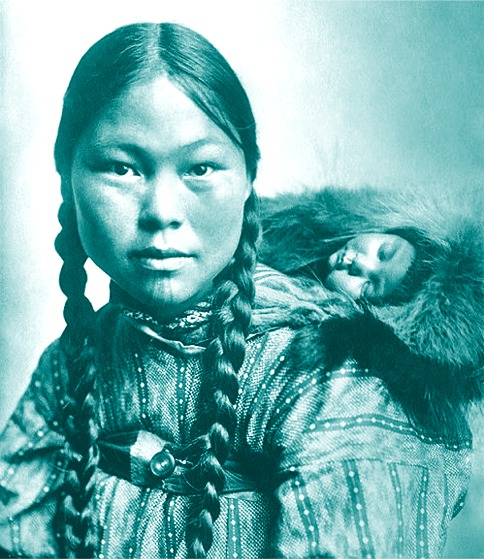
- indiani e inuit
riconosciute dal governo federale osservatoriosullalegalita.org
inuit significa letteralmente «uomini»,
mentre il nome Eschimesi,
con cui sono generalmente noti, pare sia di origine algonchina e significhi
«mangiatori di carne cruda»_wiyaskimowk
. treccani Inuit -
ᐃᓄᐃᑦ in lingua inuktitut
parola che significa uomini - singolare inuk o inuq
- è un piccolo popolo dell'Artico che discende dai Thule.
Gli Inuit
sono uno dei due gruppi principali insieme agli Yupik: il
termine dispregiativo «eschimesi»
- che significa «fabbricante di racchette
da neve», mentre la traduzione «mangiatori
di carne cruda», spesso riportata, è una
paraetimologia) - fu usato dai nativi americani Algonchini del Canada
orientale per indicare questo popolo; loro si vestivano di pelli e la
popolazione era costituita da esperti cacciatori.
Gli Inuit e gli Yupik
non amano l'utilizzo di questa parola considerando che hanno, appunto, un
proprio nome specifico. https://it.wikipedia.org/wiki/Inuit
.
which name is correct ?
native - aboriginal -
first nation
Some call them the Inuit Indians or
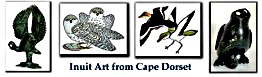
the Inuit tribe and even more commonly, Eskimos. As an Inuit art gallery we hear
these terms used all the time. This page has been created to help educate people
as to who the Inuit are and to help build an appreciation for these wonderful
people and their amazing artistic ability.
The Inuit people are the most widely dispersed group in the world still leading
a partly aboriginal way of life.
They live in a region that spans more than 3,500 miles. This region includes
Greenland, the northern fringe of North America, as well as a sector of eastern
Siberia. Inuit are racially distinct from the North American Indians. In fact,
the Inuit are closely related to the Mongolian peoples of eastern Asia. The
Inuit - Aleut languages are unrelated to any American Indian language groups.
At no time did the Inuit possess a national or well - defined tribal sense. The
Inuit emphasis was always on the local and familial group rather than on
associations based on land and territory. The terms Inuit Indians, the Inuit
Indians, Inuit tribe and Eskimo are not the correct names for these kind and
gentle people.
Inuit simply means
'The People' in Inuktitut, the language of the Inuit and Inuit is the name they
wish to be known by. Inuit - their rightful name, replaces 'Eskimo' a term
based on a Algonkian word meaning 'eaters of raw flesh.'
In the words of Jose Kusugak, president of Inuit Tapirisit Kanatami, an
organization that represents Inuit from Labrador to the Northwest Territories,
"In Canada and America we are trying to make people understand that we are a
distinct people and not Indians... We want them to understand that Inuit work
real hard to get children educated and make sure they hold on to their culture."
-
The Inuit population was approximately 50,000 at the time of the first
widespread contact with Europeans.
An estimated 2,000 Siberian Inuit lived near the Bering Strait, the Alaskan
Inuit numbered about 25,000.
The Central Eskimos who inhabited northern Canada numbered about 10,000. The
Labrador Inuit totalled
about 3,000, while the Inuit on Greenland totalled about 10,000.
The terms "aboriginal" or "native"
people apply not only to the Inuit, but to the North American Indians, and Métis.
The term "First Nations" however refers only to Indians.
There are three distinct aboriginal groups in Canada :
* North American Indians (population: 554,290)
* Métis (population: 210,190)
* Inuit (population: 41,080) (Source: 1996 Census of Canada)
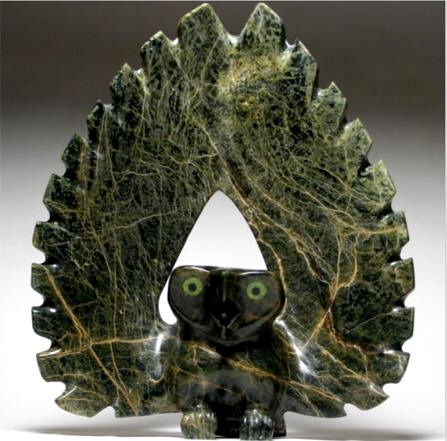
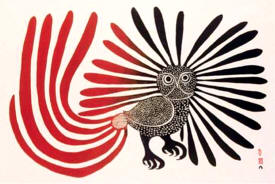
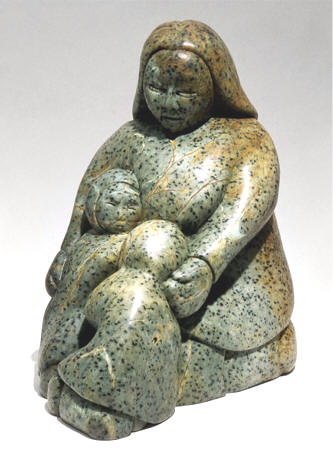
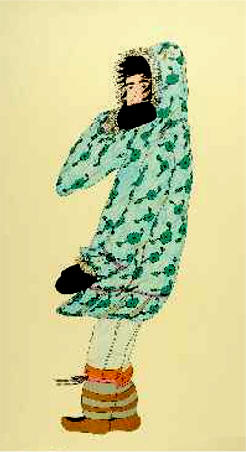
Much of the attention the Inuit people and their culture receives has been
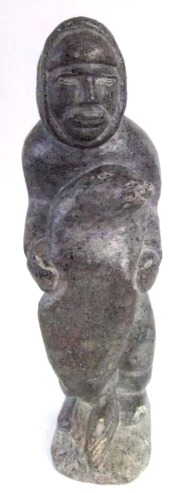
brought about as a result of their tremendous skill as artists, particularly as
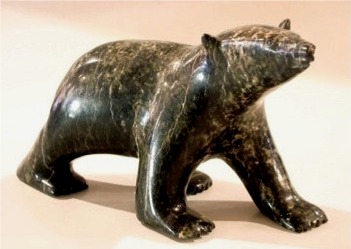
stone carvers, printmakers and recently creators of jewellery. Inuit art was
first brought to the attention of the world outside of the North by James
Houston in the late 1940's. James Houston also taught the Inuit people how to
make prints. Today, the Inuit support themselves primarily through the sale of
their art. In the award winning documentary film "Songs in Stone" which was shot
primarily on Baffin Island, James Houston recollects that historic moment when
he first received a stone carving as a gift from an Inuit man. To learn more
about the art of the Inuit people and James Houston
click here
houston-north-gallery.ns.ca
Canada - Thanksgiving - Il Giorno del Ringraziamentonovembre “indiani” e “inuit” ... spesso dimenticati ma
onorati dai canadesi che li chiamano “First Nations”
canada - going deeper - The Ecological Indian: Myth and History
Indians sometimes used all the meat from animals
they killed, and they sometimes did not.
To conserve a resource, in its most widespread definition, means not to waste
it. Indians who ate only the buffalo’s tongue, only the fetus, or only the hump,
or who abandoned bulls because they preferred cows, were not by definition
conservationists - unless the definition is altered.
ABOUT NUNAVUT'S OFFICIAL LANGUAGES
THE NEW OFFICIAL LANGUAGES ACT FOR NUNAVUT RECOGNIZES THE INUIT (INUKTITUT
AND INUINNAQTUN), ENGLISH AND FRENCH LANGUAGES AS THE OFFICIAL LANGUAGES
WITHIN THE TERRITORY. THE INUIT
LANGUAGE INCLUDES INUINNAQTUN AND INUKTITUT. THERE ARE TWO DIFFERENT WAYS PEOPLE IN
NUNAVUT WRITE THE INUIT LANGUAGE:
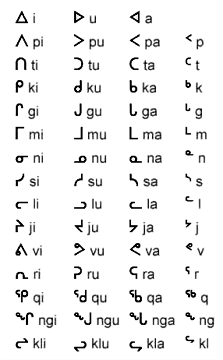
QALIUJAAQPAIT (OR ROMAN ORTHOGRAPHY) AND QANIUJAAQPAIT (SYLLABICS).
MOST INUKTITUT SPEAKERS IN NUNAVUT USE
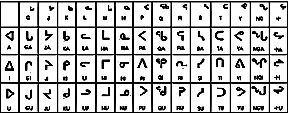
SYLLABICS TO WRITE THEIR LANGUAGE. THIS WRITING SYSTEM IS MADE UP OF
ABOUT 60 CHARACTERS,
MOST OF THEM REPRESENTING COMPLETE SYLLABLES. THUS “NU”
IN ROMAN ORTHOGRAPHY
IS WRITTEN WITH ONE CHARACTER IN SYLLABICS: “
ᓄ ”. THE ROMAN ORTHOGRAPHY
WRITING SYSTEM USES THE SAME LETTERS THAT ARE USED TO WRITE ENGLISH OR FRENCH
MANY PEOPLE WHO NORMALLY USE SYLLABICS WILL ALSO USE ROMAN ORTHOGRAPHY,
ESPECIALLY FOR WRITING E-MAILS OR WHEN DOING OTHER TASKS ON COMPUTERS.
THE GOVERNMENT OF NUNAVUT’S COMPUTERS NOW HAVE THE CAPACITY TO WORK IN
SYLLABICS. INUINNAQTUN SPEAKERS ALMOST ALWAYS USE ROMAN ORTHOGRAPHY.
IN THE 2006 CENSUS, 64% OF RESPONDENTS REPORTED USING THE INUIT LANGUAGE
IN THE HOME, EVEN THOUGH IT IS THE MOTHER TONGUE OF 83% PERCENT OF THE
POPULATION. THIS REPRESENTS A 12% DECLINE IN TEN YEARS. THIS IS PARTLY
DUE TO A VERY LARGE YOUTH POPULATION, WITH A MEDIAN AGE IN 2006 OF 23.1
YEARS, COMPARED TO CANADA’S MEDIA AGE OF 39.5 YEARS. FRENCH THE 2006
CENSUS REPORTED 420 INDIVIDUALS WITH FRENCH AS THEIR MOTHER TONGUE AND
1200 CLAIMING TO SPEAK IT. NUNAVUT’S CAPITAL OF IQALUIT IS HOME TO A
THRIVING FRANCOPHONE COMMUNITY. ALTHOUGH CLOSE TO 800 IN IQALUIT
REPORTED THE ABILITY TO SPEAK FRENCH, THERE ARE MANY FRANCO-INUIT
FAMILIES IN THE CITY. THE FRENCH SPEAKING POPULATION IS SERVED BY A
SCHOOL, A DAYCARE, A COMMUNITY RADIO STATION, AND A CULTURAL CENTRE THAT
IS OPEN DAILY AND STAGES VARIOUS EVENTS THROUGHOUT THE YEAR. ENGLISH ENGLISH
IS VERY PREVALENT IN REGIONAL CENTRES AND LARGER COMMUNITIES AND IS THE
DE-FACTO LANGUAGE OF GOVERNMENT AND INDUSTRY. facebook.com/inuitartzone
- 2013
.
Nunavut’s Official Languages
Act came into force on April 1, 2013, establishing the Inuktitut,
English and French as the territory’s official languages. I am proud that Inuit in Nunavut now have a clear
statement of their inherent right to the use of the Inuit Language in
full equality with English and French. James Arreak, Nunavut’s languages minister
- 2013
nunatsiaqonline.ca The new Government
of Nunavut department known in English as the Department of Family
Services will be called Inulirijikkut in the Inuit language .
The word is based on the term “inuliriji”
- ''person who help people'' - ''social worker'' - ''person who works
with people'' . nunatsiaqonline.ca - facebook/inuitartzone - 2013
.
Studiosi e biblisti dall'Alaska, dal Nunavut e dalla Groenlandia hanno
partecipato a Toronto, in Canada al primo congresso sulla traduzione
della Bibbia nelle lingue inuit.
avvenire.it - 2017
.
sistema di scrittura unificato La nuova ortografia
standard si chiama Inuktut Qaliujaaqpait
: utilizza combinazioni di lettere latine per rappresentare i suoni di
tutti e cinque i dialetti presenti sul territorio ... il
sistema di scrittura unificato sarà invece «un sistema di scrittura
creato da inuit per inuit». ilpost.it - 2019 Atausiq
Inuktut Titirausiq The Atausiq Inuktut Titirausiq (AIT) Task Group
includes language specialists from each Inuit region. It is mandated to
research and identify the speech components of Inuktut and the current
Inuktut orthographies in use and recommend an Inuktut orthography that
has the best chance of advancing Inuktut far into the future.
www.culturalsurvival.org/canada-unification-inuit-language-variations-necessary-survival
- 2019
tungasuvvingatinuit.ca
- 2019
.
What's in a Name?
Inuit
A member of a group of Eskimoan peoples inhabiting
the Arctic from northern Alaska eastward to eastern Greenland,
particularly those of Canada.
Eskimos
A group of peoples inhabiting the Arctic coastal
regions of North America and parts of Greenland and northeast
Siberia
Native American
A member of any of the indigenous peoples of the
Western Hemisphere. The ancestors of the Native Americans are
generally considered by scientists to have entered the Americas
from Asia by way of the Bering Strait sometime during the late
glacial epoch.
First Nation
An organized aboriginal group or community, especially
any of the bands officially recognized by the Canadian government.
status Indian
A federally registered member of a band or First
Nation, having special status under Canadian law
treaty Indian
A status Indian belonging to a band that has
signed a treaty with the federal government.
There
are only very few Inuit, but millions of qallunaaq (white
people) just like mosquitoes. It is something very
special and wonderful to be an Inuk- we are like
the snow geese. If we abandon our Inuit ways, or no
longer find it important to use our language, we will be
nothing but just another mosquito -
Abraham Okpik, 1979
Il bacio eschimese
nella cultura occidentale moderna è l'atto di sfiorare e
premere delicatamente la punta del proprio naso contro un
altro, solitamente quello del proprio partner .
È vagamente basato sul saluto tradizionale Inuit chiamato
Kunik . È chiamato anche naso a naso o bacio malese
. Il Kunik è un atto
per esprimere affetto, solitamente tra familiari e cari,
che consiste nella pressione del naso e del labbro
superiore contro la pelle comunemente delle guance o della
fronte di una persona e sospirare . È
considerato un atto d’amore e grande fiducia nei confronti
della persona a cui si fa .
https://it.wikipedia.org/wiki/Bacio_eschimese
the Inuktitut word for computer is qarasaujaq — "something
that works like a brain" — while qulimiguulik, meaning "that
which has something going through the space above itself is
Inuktitut for helicopter.
In Inuktitut, there are several hundred basic verb endings, as
well as variations depending on the sound system. Take, for
example, the verb root malik - "follow."
maliktunga — "I follow"
malikkassik — "because you two follow"
malikkit — "follow them!"
malikkuttikkuk — "if we two followed those two"
malingmangaakku — "whether I followed her"
nunavut.com
There are only very few Inuit, but millions
of qallunaaq - white people
- just like mosquitoes. It is
something very special and wonderful to be an Inuk- we are like
the snow geese. If we abandon our Inuit ways, or no longer find
it important to use our language, we will be nothing but just
another mosquito.
Abraham Okpik 1979 halfmoon.org
The story
about Inuit words for snow is completely wrong. That language
group uses multiple suffixes so you can derive
not 50 but 150words for snow. itre.cis.upenn.edu
.
parole nuove Sheena Adams, coordinatrice dell’Inuvik
regional Energy project
dell’Arctic Energy alliance, sta collaborando con gli anziani
di Inuvialuit per redigere un vocabolario nella
lingua Inuvialuktun con i
nuovi termini per l’energia rinnovabile. ... la parola 'vento'
esisteva già in Inuvialuktun, così come la parola per 'turbina',
anche se in realtà in Inuvialuktun si riferisce alle ali di una libellula,
quindi la parola turbine eoliche è venuta da sola.
Amos dice che Le radici delle
parole sono antiche. E’ interessante notare che
quella che è piaciuta loro di più non una parola che ho
chiesto loro di tradurre, ma sono riusciti a farlo e hanno
deciso che era la loro preferita in assoluto. Questa parola è
taniktuun,
che si traduce in apprendimento
collaborativo. La loro
definizione di taniktuun è: Lavorare insieme, impariamo e
diventiamo più intelligenti. greenreport.it - 2017
negligevapse - i love you
TAIMA, QUJANNAMIIKè tutto. grazie TAVVAUVUSIarrivederci a tutti voi planet.racine.ra.it
 native
americans
native
americans